

























































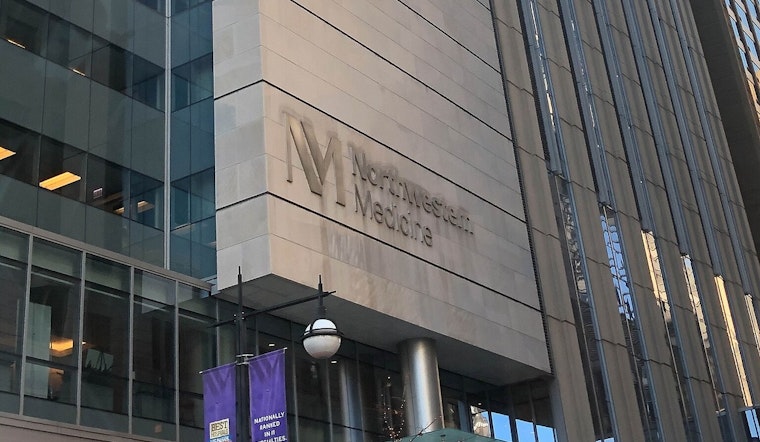
Tom Contos, a 45-year-old Chicago healthcare consultant and avid runner, found himself in a deeply frustrating situation following a colonoscopy that was supposed to be a routine diagnostic procedure. As reported by the Chicago Sun-Times, Contos experienced rectal bleeding, which led to his undergoing a colonoscopy at Northwestern Memorial Hospital after being referred by his physician due to a family history of colon issues.
Despite initial expectations set by the hospital's cost estimate provided to him through an online patient portal—and having prepaid $1,000 of the predicted expenses—Contos could not have anticipated the billing ordeal that awaited him. As detailed by the Washington Post, the hospital charged him a staggering $19,206 for the procedure that typically bills at a fraction of that amount. However, his insurer, Aetna, negotiated this down to $5,816 and paid $1,979, a significant patient share of $4,047 remained, perplexing given the procedures were not difficult, according to the gastroenterologist's records.
The bewilderment stemmed partly from Northwestern Memorial Hospital's decision to charge for two colonoscopies: one for "colonoscopy and biopsy" and another listed as "colonoscopy w/lesion removal," costing $5,466 each before insurance adjustments. Dr. Glenn Littenberg, who has chaired the reimbursement committee of the American Society of Gastrointestinal Endoscopy, explained that billing for two procedures is customary if multiple polyps are removed via different methods.
A representative for Northwestern had told Contos that he was not being billed for two procedures due to the use of a modifier code, a notion that Contos found bewildering. He was determined in his response: "I told Northwestern, 'I'm not paying that, and I don't care if you send me to collections," he told the Washington Post. Despite efforts to appeal the charges, both Northwestern and Aetna stood firm on the billing. He ultimately sought alternative avenues for care, symptomatic resolution, and financial redress.
To avoid similar fates, Littenberg suggested that patients might consider freestanding endoscopy centers or ambulatory surgery centers not affiliated with hospitals, which often charge less for the same procedures. For patients looking to better understand potential costs upfront, it is recommended they investigate tools provided by federal price transparency rules, such as hospital price websites and insurer cost-estimator websites. Additionally, researching cash prices or consulting resources like Turquoise Health and Fair Health, could equip patients with a clearer estimation of expenses. "You shouldn’t have to be a medical billing expert to know what you’re going to pay," Forrest Xiao, director of quantitative research at Turquoise Health, told the Washington Post, highlighting an underlying issue in healthcare billing transparency.





.jpg)