

























































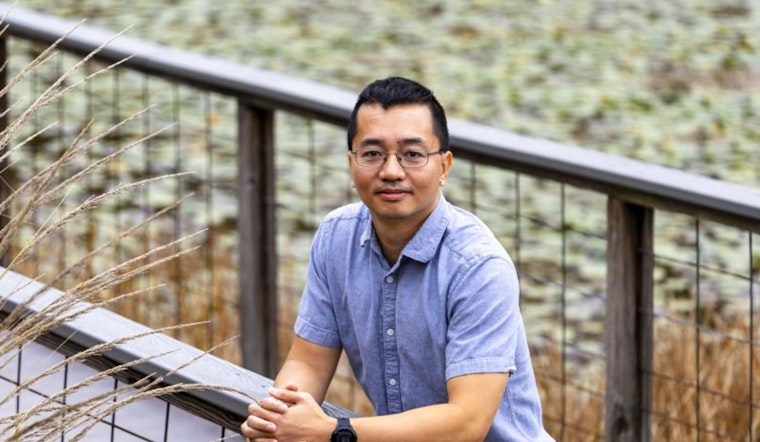
Amid the tangible threats posed by extreme weather events, Phong Le, a computational hydrologist at the Department of Energy’s Oak Ridge National Laboratory (ORNL), is on the forefront of developing advanced simulations that offer a detailed understanding of watersheds and the risk they carry for flooding and other natural hazards, as reported by ORNL News.
Le's work incorporates an array of data, including soil variability, land cover, and weather patterns, into complex models aimed at more accurate, long-term forecasts of water-related phenomena that impact human populations and ecosystems; the urgency of this work is underscored by the US National Oceanic and Atmospheric Administration's 2024 report, documenting 24 weather disasters in the US and the unfortunate loss of 418 lives, which Le’s efforts may help mitigate in the future. "These are important modeling capabilities that significantly move our science forward," Le told ORNL News, emphasizing the general applicability of their framework for flood modeling beyond the Texan landscape they currently focus on.
Le’s expertise is particularly pivotal in projects such as IDEAS-Watershed, which integrates data science and machine learning into hydrology for improved water resource management. Additionally, his involvement with the DOE Southeast Texas Urban Integrated Field Laboratory (SETx UIFL) offers insights into air quality and the potential effects of hurricanes and flooding on the Beaumont-Port Arthur area in Texas, which is economically significant and often at risk.
The accuracy of Le's flood modeling framework, that provides improved estimates of frequent and rare flood events by accounting for a range of factors from infrastructure to land slope, is pivotal in assessing risks to population density and could inform better preparation for severe weather events; this meticulous approach reflects ORNL’s supercomputing capabilities, which Le praised, recalling his awe when learning about the Titan supercomputer during his graduate studies, "ORNL’s supercomputers provide the compute power I need to run the complex simulations we’re developing to understand water resources," he reminisced with ORNL News.
Hanoi-born Le's fascination with hydrology was sparked by the city’s rivers and was nurtured by his father, a meteorologist, who encouraged his pursuit in Earth sciences. Le's academic journey took him from Vietnam to the University of Illinois Urbana-Champaign and eventually to ORNL, where his sage advice for burgeoning scientists resonates: "Follow your own career path rather than chasing the hype." He added, "Don’t be afraid to tackle fundamental problems, even if your discoveries may go unnoticed at first," he conveyed in an interview with ORNL News.
Through his dedicated research, Phong Le is contributing to a critical understanding of the nexus between hydrology and human risk, striving to provide the scientific foundations that will empower communities to better prepare for and adapt to an increasingly volatile natural world.





