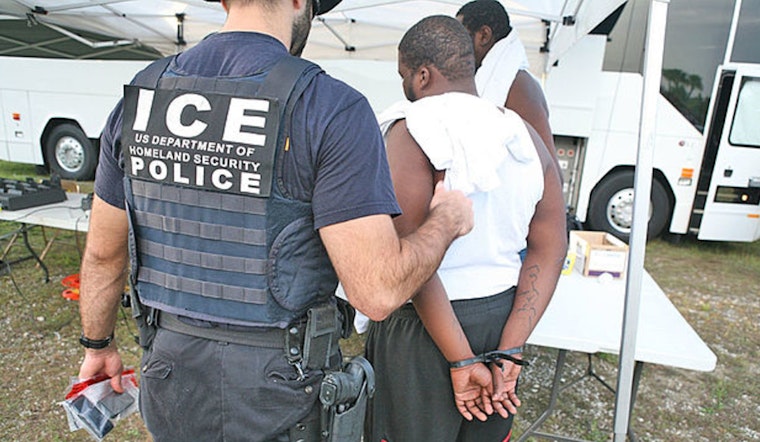
Chicago has become the latest stage for the Trump administration's pressing immigration policies, as multiple federal agencies converge upon the city to enforce immigration laws. A Department of Justice spokesperson conveyed to NBC News that Acting Deputy Attorney General Emil Bove is on the ground in Chicago, backed by the presence of Trump's "border czar" Tom Homan. Their presence underscores a significant move by the Trump administration to prioritize immigration enforcement actions involving agencies such as the FBI, DEA, ATF, U.S. Marshals, and the Department of Homeland Security.
These unfolding events have raised concerns and tensions among residents and local officials alike, mainly over the potentially expansive reach of the operations. The Illinois Governor, JB Pritzker, has been vocal about his stance, as reported in an interview with CNN's "State of the Union," shared by NBC Chicago. "They’re going after people who are law-abiding, who have families here, who have jobs and may have been here for decades. Why are you going after them? These are not people who are causing problems in our country," he said, expressing a clear delineation between law enforcement priorities and the perceived targeting of non-violent undocumented residents.
According to reports from the Chicago Sun-Times, the scope of recent immigration raids remains uncertain, although the city has been on high alert considering the Trump administration's heightened rhetoric on enforcing immigration laws. Bove's presence, alongside Homan, is seen as a reinforcement of the administration's commitment to intensify such enforcement measures, which have reportedly led to hundreds of arrests in the preceding days.
Gov. Pritzker's response to the federal actions has not only been couched in critique but also in an affirmation of state policies that stand at odds with federal tactics, as detailed by the Chicago Sun-Times. Illinois upholds "sanctuary" laws that limit the cooperation of local law enforcement with federal immigration agencies, particularly when no court-issued warrants are supported. Pritzker insists on compliance with these laws, which aim to protect certain undocumented individuals who have integrated into the community, “We’re going to follow the law in Illinois. We expect them to do the same, and I’m very afraid they will not follow the law,” he said in NBC Chicago.
The Chicago scenario is potentially setting the stage for a larger confrontation between state and federal authorities over immigration enforcement. With the Trump administration doubling down through officials like Bove and Homan, local jurisdictions with sanctuary policies find themselves defending their stance, while the lives of countless undocumented individuals remain uncertain in the crossfires of this contentious debate.