

























































As Illinois residents crank up their heat to combat the freezing temperatures, the threat of fires and carbon monoxide (CO) poisoning looms larger. The Office of the Illinois State Fire Marshal (OSFM) is reminding everyone about the importance of home heating safety this winter and has issued a set of guidelines to keep families safe during these cold months. A key recommendation is to ensure that furnaces are checked, filters are changed, and that CO and smoke alarms are in working order, according to a recent press release by the OSFM.
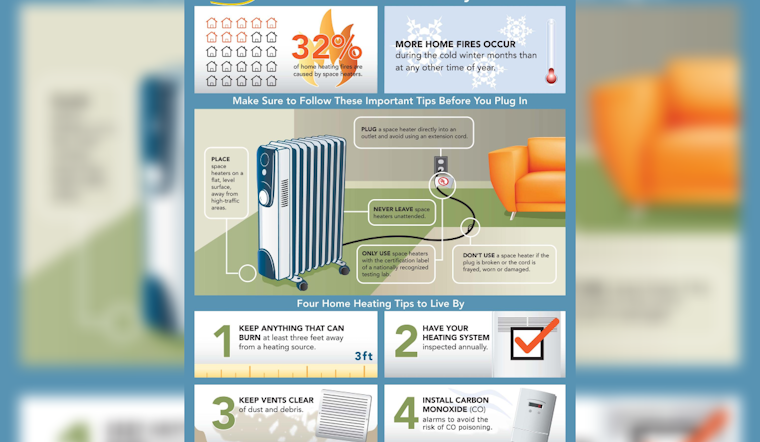
Heating equipment ranks high as a cause of home fire deaths, with space heaters leading to the most significant loss in life and property according to the National Fire Protection Association (NFPA). Between 2018 and 2022, an estimated 40,997 fires involving heating equipment were reported annually, accounting for 12% of all home fires. Of the resulting tragedies, almost 90% of deaths and four out of five injuries were due to space heaters. Most deathly of these instances were caused by heating equipment positioned too close to combustible items. Illinois State Fire Marshal James A. Rivera remarked, "We have already seen tragedy strike in the state when it comes to carbon monoxide this winter." He underscored the necessity of working CO detectors, and vigilance in their monthly testing.
2024 saw the Illinois Fire Departments responding to 23,158 calls concerning carbon monoxide. Out of these, 8,176 were confirmed CO leaks, as tracked by the National Fire Incident Reporting System (NFIRS). The deceptive nature of CO poisoning, which mirrors flu symptoms like headaches, fatigue, nausea, and dizziness, makes the presence of functioning CO alarms even more crucial. Authorities suggest that the presence of condensation on walls and windows, sluggish pets, and odorous appliances may also be warning signs. Rivera stressed, "if you can evacuate the building, do so immediately" in the event your CO alarm sounds and advise calling 9-1-1 from a safe location.
Additional safety tips from the OSFM include annual inspections and cleanings of heating equipment by qualified professionals, professional installation of heating apparatus in accordance with local codes, and ensuring a minimum three-foot distance between heating equipment and flammables. For those using portable heating units, purchasing those with automatic shutoff features and creating a "kid-free zone" is advised. Also paramount is the monthly testing of smoke and CO alarms and the awareness of the sounds they produce. Residents should never use an oven to heat their home, remember to turn off space heaters when not in use, and properly install CO and smoke detectors in strategic locations of their homes. It's also noted that CO detectors' lifespan is limited, and thus proper attention should be given to the manufacturer's guidelines regarding replacement.




