

























































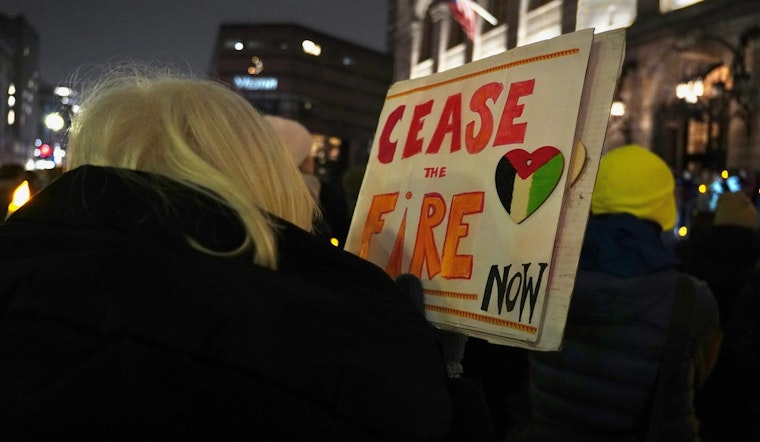
The recent ceasefire between Israel and Hamas has sparked a mixture of relief and concern, with local reactions highlighting the precarious nature of the agreement. Following months of conflict, the ceasefire promises a halt to the violence that has engulfed the region since October 2023.
As part of the agreement, three Israeli women held captive by Hamas were joyfully reunited with their families, an event documented in Scottsdale's Congregation Beth Tefillah, where Rabbi Pinchas Allouche told ABC15, "Just seeing their faces and seeing them reunited with their families, of course, invites emotions of tremendous joy." Despite celebrating the release of hostages, Allouche expressed worry over the compromise, stating, "Because for these three hostages, tens of terrorists with blood on their hands have been released, and who is to tell if they will not return to their ways of terror."
In contrast, proponents of Palestinian rights, like the Arizona Palestine Solidarity Alliance, hesitantly welcomed the ceasefire but stressed the need for a lasting solution that ensures peace and equity. Mohyeddin Abdulaziz, the founder of the alliance, emphasized the importance of addressing the root causes of the conflict, saying in an ABC15 interview, "We need to deal with the conditions that led to October 7. Ignoring that, OK, only leads to more violence."
In the Pioneer Valley, skepticism remains, despite the ceasefire announcement. Activists there are continuing their advocacy efforts, with plans to mark Martin Luther King Jr. Day with a march and a reading of King's powerful speech, "A Time to Break Silence." Claudia Lefko, a Northampton resident and organizer, told the GazetteNet, "It speaks to the state of a country that’s always at war. Hopefully the ceasefire goes into effect, and we won't forget the Palestinians."
The proposed three-phase ceasefire agreement, involves not only the release of hostages but also bringing desperately needed humanitarian aid to the region and allowing displaced Palestinians to return to their homes. The Rev. Peter Kakos, who has been outspoken against the Israeli government's actions in Gaza, was quoted by GazetteNet expressing cautious optimism, "We hope that as the ceasefire unfolds, the people of Gaza and West Bank will be able to receive the long withheld necessities of medicine, food, water, and shelter." Everyone is keenly aware that the voices of both Israelis and Palestinians are tied together by the threads of a tenuous peace, hanging in the balance.





