

























































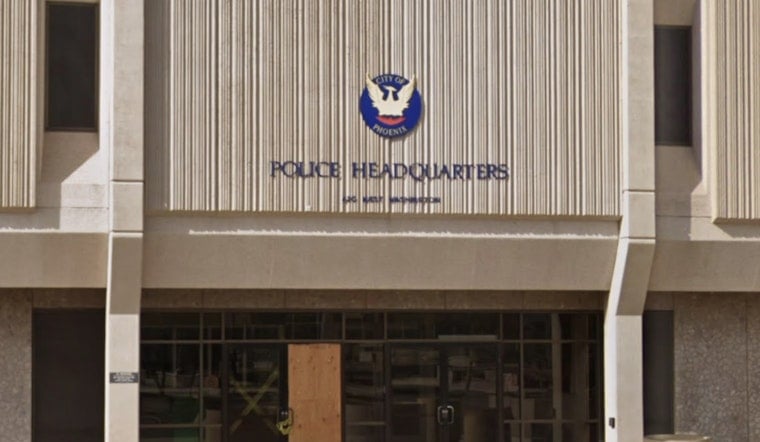
Two Phoenix police officers have been placed on administrative leave while investigators examine whether they used force during a traffic stop and then failed to report it or turn on their body-worn cameras. The Phoenix Police Department says it only recently learned of the accusations and has opened a criminal investigation into the pair, though officials caution that details remain limited at this early stage.
According to AZ Family, preliminary information indicates the officers used force during the traffic stop but did not report the incident as required, nor did they activate their body cameras during the encounter. The department has not disclosed when or where the stop took place, and it has not released the names of the officers involved. The case has been handed to the department's Special Investigations Unit, which is leading the criminal probe.
Phoenix police say they will share information as the investigation moves forward, though the department has offered little beyond confirming the leave and the criminal inquiry. Under department policy, officers are required to report any qualifying use of force, and Phoenix Police Department Operations Order 1.5.02 specifically mandates that officers notify an on-duty supervisor and log the incident in the department's BlueTeam/IAPro system before the end of their shift, according to a copy of the order hosted on PowerDMS.
Body-Camera Rules Were Already in Place Department-Wide
Separate department policy, Operations Order 4.49, requires officers to activate body-worn cameras during all enforcement contacts and on-view events, with supervisors conducting weekly random inspections of footage to check for compliance, per a summary published by CrimeSolutions.gov. Phoenix Police fully deployed body cameras across all patrol squads back in 2019, meaning the requirement to record enforcement stops was already well established at the time of this incident.
Department protocol also lays out how the case will move through the system. Criminal allegations against officers are first evaluated by the Special Investigations Unit before the Professional Standards Bureau can open its own administrative review, per procedures described by the City of Phoenix. In this case, the Professional Standards Bureau will not begin its administrative investigation until the criminal probe concludes.
What State Law Says About False Reports
If investigators determine that either officer knowingly misrepresented facts about the stop, Arizona law could come into play. Under Arizona Revised Statutes § 13-2907.01, knowingly making a false or unfounded report to a law enforcement agency, or misrepresenting facts to mislead a peace officer, is a Class 1 misdemeanor punishable by up to six months in jail and a $2,500 fine. Separately, Arizona Revised Statutes § 38-1118 requires all state and local law enforcement agencies, including Phoenix police, to collect and report officer use-of-force data to the Arizona Criminal Justice Commission, a transparency requirement that took effect in 2022.
This is not the first time in recent months that Phoenix police have opened a criminal case against their own. In April, Phoenix detectives arrested a 23-year-old probationary officer, Conner Orth-Smith, on aggravated assault charges tied to an on-duty encounter at a local hospital, according to a report by FOX 10 Phoenix. That officer had reportedly been called to assist hospital security before the incident occurred.
A Pattern of Body-Cam Discrepancies in Phoenix
Body-camera footage, or the lack of it, has repeatedly shaped Phoenix policing controversies. In a Hoodline report from March, a civil lawsuit was filed against the city after body-camera video showing a suspect complying with commands contradicted an officer's written report claiming the man had assumed a fighting stance; prosecutors had already dropped the criminal charges after reviewing the footage. In October 2024, Maricopa County prosecutors dropped felony charges against Tyron McAlpin, a deaf man with cerebral palsy who was Tased and struck by officers, after body-camera video contradicted officers' claims that he had taken a fighting stance during the arrest.
The current investigation also unfolds without the backdrop of active federal oversight. In June 2024, a 126-page U.S. Department of Justice report concluded that the Phoenix Police Department had engaged in a pattern or practice of constitutional violations, including excessive force and inadequate oversight of force reporting, as reported by CBS News. But in May 2025, the Department of Justice under the Trump administration formally closed that pattern-or-practice investigation and retracted its findings of constitutional violations, according to FOX 10 Phoenix. That closure rescinded any proposed federal oversight or court monitors, leaving the Special Investigations Unit, the Maricopa County Attorney's Office, and the Professional Standards Bureau as the primary avenues for accountability in cases like this one.
For now, the identities of the two officers, the exact degree of force used, and whether prosecutors will ultimately pursue misdemeanor false-reporting charges or something more serious remain open questions. Phoenix police have said only that they will continue to share information as the Special Investigations Unit's criminal inquiry proceeds.





