

























































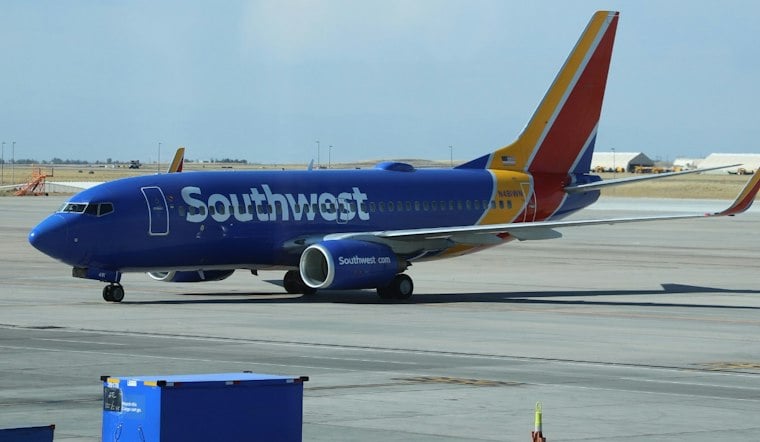
A Southwest Airlines Boeing 737 MAX 8 bound from Phoenix to Oakland rolled unexpectedly at 34,000 feet on May 25, 2024, sending its tail swaying side to side in what's known as a Dutch roll before the pilot landed the plane safely with all 175 passengers and six crew members aboard unharmed. More than two years later, federal investigators say they now know why.
The National Transportation Safety Board's final report, published Thursday, concludes that the rudder anomaly traces back to wind damage the jet suffered nine days earlier while parked overnight in New Orleans, according to AeroCorner. On May 16, 2024, the aircraft sat on the ground at New Orleans International Airport as thunderstorms rolled through, with the airport's weather station recording gusts up to 84 mph under a tornado watch, per the same account. Investigators concluded the extreme wind likely moved the rudder hard enough to damage the ribs that hold the plane's standby rudder power control unit in the tail fin.
A Maintenance Check That Missed the Damage
The damage went undetected through a scheduled maintenance check on May 23. Hangar security video showed the rudder traveling right but not left during the standby hydraulic test, and nobody was stationed at the tail to watch it happen, the report notes. Southwest mechanics signed the test off as passed anyway, missing that the rudder was out of position.
The following day, on May 24, pilots flying the jet believed they were dealing with issues related to the yaw damper, an automatic system that makes small rudder movements to keep a plane's tail from swaying, and the jet was flown with that system disabled, according to Arizona's Family. Pilots flew the plane 38 times from May 17 through May 23 without reported rudder problems; the May 25 incident was the 44th flight since the storm.
The Dutch Roll Over California
It was the next day, May 25, that the trouble surfaced in the air. At about 2:45 p.m., the Southwest jet experienced the Dutch roll at 34,000 feet and again after descending to 32,000 feet, according to Arizona's Family's reporting. Aviation Herald identified the aircraft as registration N8825Q operating flight WN-746 from Phoenix to Oakland. The jet landed normally in Oakland, and nobody was hurt, AeroCorner's account of the final report confirms.
Three Factors, One Missed Warning
The NTSB's final report points to three contributing factors behind why the storm damage went unnoticed for as long as it did: the improper standby hydraulic test performed by Southwest mechanics, the absence of a wind-speed threshold in Boeing's maintenance manual, and the lack of an adequate Southwest process for flagging aircraft that had been exposed to extreme winds while parked. Investigators said the damage would have been caught if Boeing's manual had included a minimum wind speed that triggers an inspection, and separately said it would have been caught if Southwest had a system to alert mechanics when parked planes are hit by extreme winds.
In response, Boeing has revised its 737 manual so that a high-wind inspection is now triggered at 75 mph, or 65 knots, AeroCorner reports. The change targets the exact gap investigators say allowed a storm-damaged tail to slip through a maintenance check undetected before the rudder anomaly surfaced at cruising altitude.



