

























































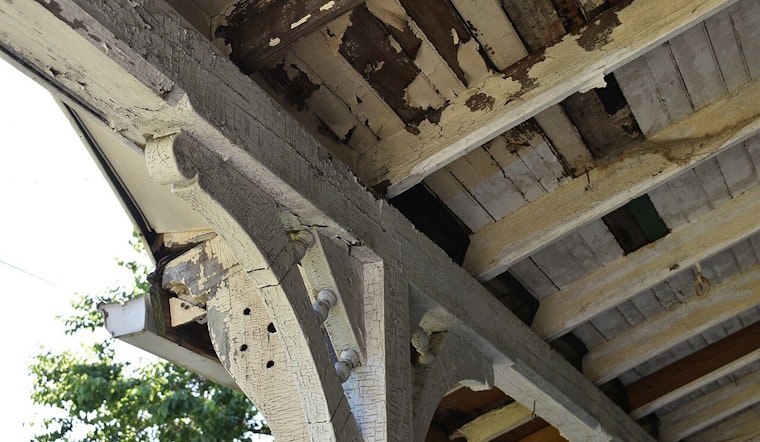
New regulations are kicking in this year, and they're bound to change the landscape of how we deal with the insidious legacy of lead paint. According to Crain's New York, New York State is taking a $16 million dive into preparing for new lead paint regulations. The money will gear up counties for a state registry of older rental buildings, targeting communities where child lead poisoning is most at risk. The beefed-up rules mean that housing built in select cities before 1980 with more than two rental units will need to be inspected and certified as lead-free every three years, starting come November.
But that's only half the story. The New York Times reported on the E.P.A.'s recent flex to tighten up the requirements for removing lead paint dust in homes and child-care facilities. This federal push decrees that any detectable lead dust level will be branded a "lead hazard," forcing property owners to foot the bill for cleanups. While the E.P.A. emphatically states "There is no safe level of lead," those expected to comply are wary about the potential financial impact of this new rule.
Over in the Empire State, this initiative isn't just about ticking boxes in regulatory compliance — it's an all-out effort to shield kiddos from lead's toxic grasp. "The $16 million is part of a larger $40 million allocation in the current and previous state budgets," Erin Clary, Health Department spokeswoman, stated according to Crain's New York. They're funneling funds into inspection, training programs, and public education on tenant rights and how to respond when lead rears its ugly head. While the city of New York has its own set of rules, requiring annual lead paint inspections in certain apartments, the state's maneuver extends the safety net.
Now, the E.P.A.'s move is expected to cause the number of facilities requiring lead paint remediation to jump. By nixing the previous thresholds that permitted some lead to remain post-removal, property owners are mandated to disclose any lead-test results to potential buyers. Despite the praised efforts to uproot lead exposure, the National Apartment Association and National Child Care Association have signaled distress signals about the uncompromising "absolute zero" dust levels and the pressure it puts on housing providers and child-care facilities, especially from a financial perspective. "These necessary upgrades comes at a cost," Cindy Lehnhoff, director of the National Child Care Association, cautioned in statements reported by The New York Times.
As much as numbers and budgets are bandied about, the human element remains central to the discussion. Peggy Shepard of WE ACT for Environmental Justice cuts through the economic chatter, asking, "What is the amount of money that you place on life?" – a poignant reminder of the stakes at play as reported by The New York Times. With symptoms of lead poisoning ranging from headaches and nausea to the potential of lifelong cognitive impacts on children, the discussion is far more than a mere policy debate — it's a question of our commitment to future generations' health and potential.





