

























































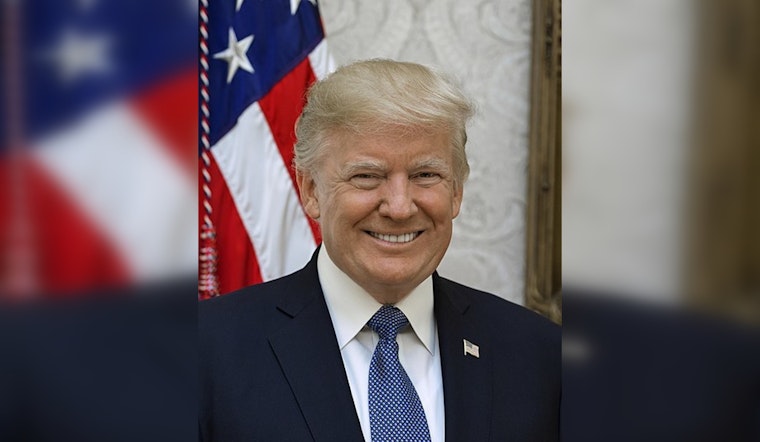
President Donald Trump charged into his second term with a barrage of executive actions aimed at immigration and border security, efforts that signal a stark shift from the previous administration. On day one, amid signings and statements, Trump declared a national emergency at the southern border, a move seemingly poised to enlist military and National Guard forces to fortify the region, as reported by NPR.
In addition to bolstering border defense, Trump's sweeping actions target various aspects of immigration policy. They include "realigning" the U.S. Refugee Admission Program, designating cartels as foreign terrorist organizations, and looking to end birthright citizenship, while Arizona border communities are bracing themselves for the possible influx of resources and personnel, Cochise County's Sheriff sees the order as a boon for local enforcement, telling FOX 10 Phoenix, "It makes it manageable. It adds resources, technology, and personnel. Everything we need to do to secure our country and our border, while bringing engagement back to these communities."
Immediate legal challenges loom over several actions, particularly the contentious effort to end birthright citizenship, a principle deeply embedded in the 14th Amendment. According to NPR, Trump also moved to "protect American citizens against invasion," aiming to rescind what he describes as the open borders policies of the Biden administration. Despite recent statistics from U.S. Customs and Border Protection showing a 70% drop in apprehensions over the last six months, but, the effects of many of these measures on the ground level, particularly in border communities, remain uncertain harboring a plethora of unanswered logistical and legal questions.
There's a palpable unease among those who live and work along the border, like in Yuma County, where agriculture thrives on a legal workforce; John Boelts, president of the Arizona Farm Bureau, noted to FOX 10 Phoenix, "Yuma County would be impacted almost not all," followed by concerns over potential damages to the industry due to tighter immigration controls, while Nogales' Mayor expresses worry over detention responsibilities potentially being thrust upon smaller border cities, stirring questions that national policies might inadvertently complicate local economies and social fabrics, which underscores the complexity of immigration policies that extend well beyond the walls and fences they propose to construct.





.jpg)