

























































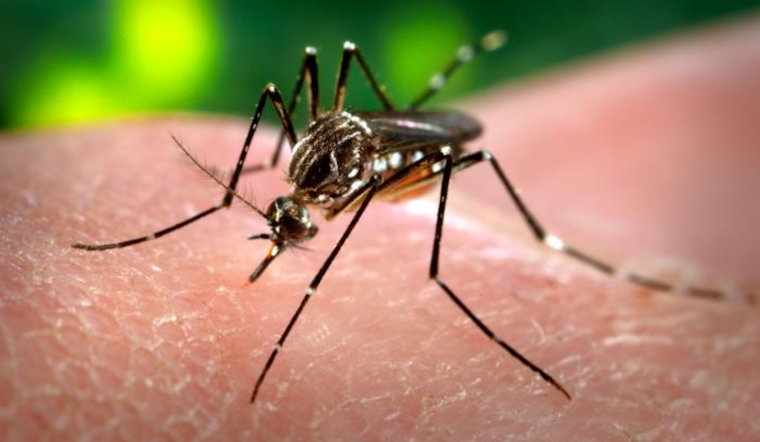
In a study shedding light on the tenacity of mosquitoes during drought conditions—and the implications this has for mosquito-borne diseases—researchers at the University of Cincinnati have gleaned insight into why these pests continue to bounce back once rains return quickly. According to their findings, mosquitoes supplement their moisture needs by increasing their blood-feeding behavior, which could, unfortunately, mean more frequent spreading of diseases such as malaria, Zika, or dengue fever. "We’re finding that mosquitoes bite people more than we imagined, unfortunately," leading postdoctoral researcher Christopher Holmes told the University of Cincinnati.
The resilience of mosquitoes can be linked to their survival strategies, which allow them to overcome periods of nearly three weeks without water. Females of these species are known to draw blood from hosts to fuel egg production. The study explained that in drought conditions, mosquitoes feed repeatedly to stay hydrated instead of settling for a single blood meal before egg-laying. Joshua Benoit, a UC professor of biological sciences, mentioned on the University of Cincinnati website, "Everyone is under the assumption that during drought, there are fewer mosquitoes and less opportunity to spread mosquito-borne illness. But the modeling doesn’t necessarily show that." His observations were published in the journal iScience.
The team's research also delved into the genetic modification of mosquitoes to impair their senses, such as the ability to sense carbon dioxide—a crucial element for locating potential hosts. Holmes noted that mosquitoes without the ability to detect carbon dioxide failed to survive the dry periods because they could not find hosts and thus could not maintain their hydration levels through blood meals. "Carbon dioxide is one of the major drivers of feeding behavior. Even though the mosquitoes were hungry or thirsty or both, in the absence of being able to use carbon dioxide to find a host, they just died," according to the University of Cincinnati Holmes explained in the study.
Moreover, the research touched on the robust nature of mosquito eggs, particularly those of the Aedes aegypti mosquito, which can endure extended dry spells. "The Aedes aegypti mosquito is resistant to drying out. Its eggs can survive sometimes for as long as a year," Souvik Chakraborty, a UC doctoral student, pointed out in the article. A brief rain can quickly raise water levels, prompting these resilient eggs to hatch. Additionally, the research addressed how certain species, like those in the genus Culex, adapt to cold by significantly slowing their metabolism, allowing them to survive winters for months.
These studies on mosquito biology and behavior provide insight into the insects' evolutionary success and highlight the importance of understanding their biology to combat the spread of mosquito-borne illnesses, which continue to pose a significant threat to public health worldwide. Current estimates hold that diseases spread by mosquitoes contribute to more than 700,000 deaths annually, underscoring the urgency of such research. "Knowing more about mosquito biology is critical to understanding how they survive and reproduce," Benoit told the University of Cincinnati, as efforts to manage and reduce the diseases they carry continue.



