

























































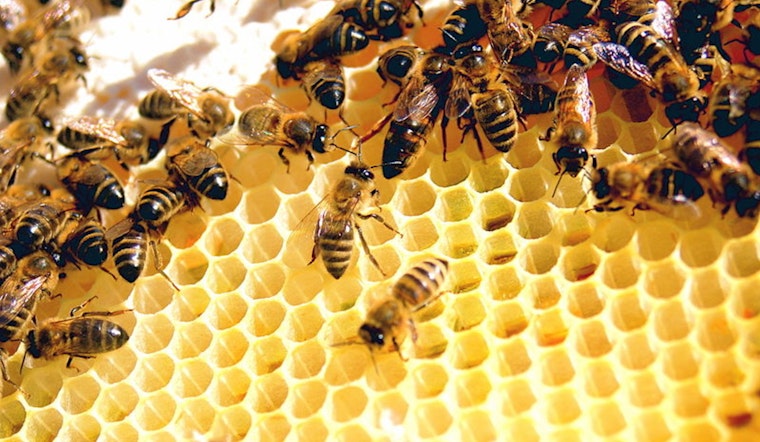
Student researchers at the University of Oklahoma are studying urban gardens to improve pollinator resilience. Their research, focusing on the relationship between local plants and pollinators, suggests that urban green spaces could be redesigned to support bee populations amid changing environmental conditions.
According to a release by the OU News, the study from the university shows that erratic rainfall and fluctuating temperatures are disrupting the timing of plant-pollinator interactions. This misalignment can be harmful, as pollinators may emerge before flowers bloom or vice versa, potentially damaging ecosystems. “We observed 879 pollinators in three urban botanical gardens in Oklahoma City, hoping to determine which plants could support these early pollinators during this critical time,” said lead researcher Tori Wierzchowski.
The research, led by OU biology professor James Hung, focused on which plants in urban gardens best supported pollen-dependent insects. The team found that large shrubs or small trees with clumps of small to medium-sized white flowers attracted the most diverse and abundant pollinators.
"Although decorative flowers might look nice to humans, they don’t provide much for pollinators. Choosing plants like densely flowering trees, native species or select exotic plants can make a real difference," said Abby Ren, a participant in the research, in the same release. "If these pollinator groups disappear, entire ecosystems could be destabilized," warned Brooke Haden, another research participant.




.jpg)