

























































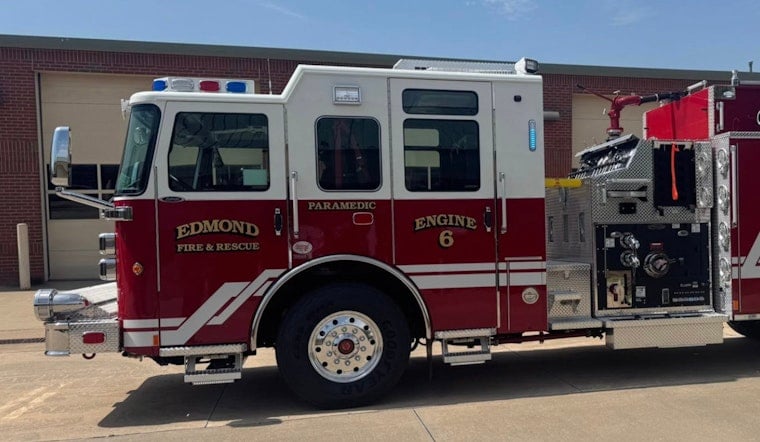
Firefighters were on the scene of a house fire in an Edmond neighborhood northeast of Coltrane Road and Second Street early Wednesday, working amid an apparent water main break that sent muddy water spilling across part of the road. Sky 5 footage showed light smoke coming from the home as crews worked the scene.
The house fire occurred amid what was described as an apparent water main break, according to KOCO. Sky 5 chief pilot Chase Rutledge reported seeing the source of the break near a mailbox in front of a home, with muddy water covering part of the street nearby. No details about the cause of the house fire had been released as of the station's report.
It remains uncertain whether the water main break was interrupting the flow of water from nearby hydrants, and the actual impact on hydrant flow had not been confirmed at the time of reporting, per the same account. That uncertainty carries real operational weight for firefighters: standard fire service procedure requires crews to test adjacent hydrants for adequate water volume before connecting hoses, and to call in additional tanker engines if pressure drops, according to Toledo Fire Rescue Department procedures that outline the tactics used broadly across the fire service. Establishing a steady water supply is considered a prerequisite before crews move to an interior attack on a structure fire.
Why Central Oklahoma's Ground Keeps Cracking Pipes
Water main breaks are not unusual in central Oklahoma this time of year. The region's expansive clay soils swell when wet and contract during dry summer heat, a cycle of ground movement that puts severe stress on buried mains and can trigger sudden ruptures, according to City of Oklahoma City utility data, which noted regional departments logged more than 1,100 emergency main breaks in fiscal year 2025. Central Oklahoma also saw a stretch of severe summer heat in July, with peak temperatures reaching 101 to 103 degrees, according to a report from KOCO that tied the heat to heightened municipal water usage and added thermal stress on pipe infrastructure.
In Edmond specifically, it's the Field Services Department that handles emergency repairs on water main breaks and service leaks, alongside maintaining more than 1,300 lane miles of city roadway, per the City of Edmond. Hoodline covered that department's emergency response work during a February snowstorm in a story headlined Field Services Braves Snowstorm, underscoring the crew's recurring role in keeping the city's water and road infrastructure functioning through weather-driven emergencies.
A Fire Department Built for These Moments
Whatever hydrant pressure challenges Wednesday's break may have caused, Edmond Fire Department enters such situations with a Class 1 ISO rating, the highest fire protection designation issued by the Insurance Services Office, reflecting top marks for equipment, staffing, and water supply network capabilities, according to Fire Apparatus. The department also expanded its footprint last October with the opening of Fire Station 6 on North Kelly Avenue, its first new station in 20 years, funded with $8.6 million from department reserves to keep pace with the city's growth. Hoodline detailed that expansion in New Fire Station 6 Opens in Edmond.
Edmond also maintains an automatic aid agreement with the Oklahoma City Fire Department that allows engines and personnel to cross city borders for priority emergencies, a system that can bring in extra apparatus if local water supplies require shuttle operations. The city has separately been expanding its Arcadia Lake Water Treatment Plant as part of a capital campaign aimed at achieving full water independence and avoiding regional distribution disruptions, since Edmond has historically had to purchase supplemental water from Oklahoma City during peak demand, according to the City of Edmond. That broader water-capacity debate has already drawn public scrutiny this year, as Hoodline reported in Edmond Eyes Data Center Moratorium.
What Residents Near the Break Should Know
For homeowners near Wednesday's rupture, the City of Edmond's water leak policy offers residential account holders up to a 50 percent bill adjustment for excess water usage tied to private line leaks, provided the repair is completed within two weeks and verified with reduced consumption on a later utility statement. Municipal fire protection and infrastructure upkeep in Edmond are funded in part through a 3.75 percent local sales tax, with a dedicated quarter-cent allocated specifically to fire department operations and facilities, per the city.
As of the latest update, no cause had been released for the house fire itself, and the precise relationship between the water main break and hydrant performance at the scene remained unconfirmed. Whether the rupture ultimately slowed the fire response near Coltrane Road, and how quickly Field Services crews were able to isolate the broken main, are among the open questions still facing the neighborhood.


