

























































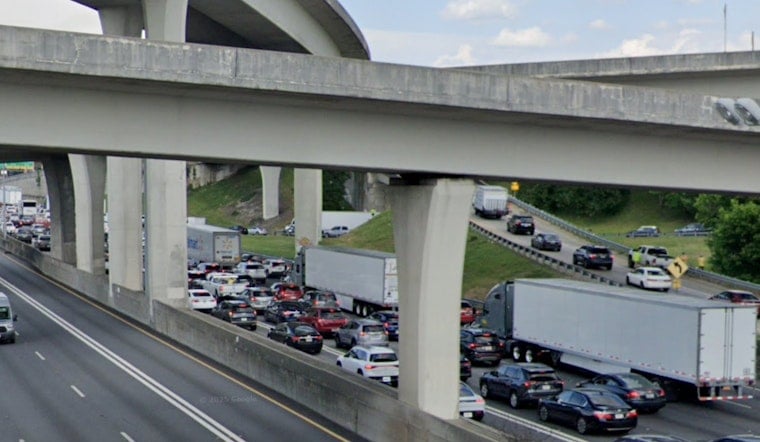
The realities of commuting in Atlanta have been quantified in a recent study, revealing a thicket of congestion that ranks among the worst in the nation for freight traffic bottlenecks. The American Transportation Research Institute's 2025 survey, which delves into the nation's most congested routes, spots three Atlanta interchanges lodged within the top 10. This was reported by FOX 5 Atlanta, which provided a detailed assessment of the notorious traffic snarls.
At the forefront, Gwinnett County's own Spaghetti Junction (I-285 at I-85) sits at No. 4. The Cobb Cloverleaf (I-75 at I-285), as it is locally known, takes the No. 6 position, with the intersection of I-20 and I-285 on Atlanta's west wall rounding out at No. 10. The survey draws its conclusions from an extensive data pool, including freight truck GPS data, and other trucking operations information, as per the FOX 5 Atlanta.
While Atlanta grapples with its traffic woes, other metropolitan areas also mark their presence on the list. Notoriously, for the seventh consecutive year, the intersection of I-95 and State Route 4 near the George Washington Bridge in Fort Lee, New Jersey, has maintained the top spot as the nation's preeminent freight bottleneck. The survey also highlighted other perennial chokepoints, including Chicago's I-294 at I-290/I-88, and Houston's I-45 at I-69/US 59, which respectively held second and third positions.
Apart from the top-tier constrictions in Atlanta's traffic arteries, other notorious regions making the top 100 list included I-75 through McDonough at No. 12, I-20 at I-285 East at No. 14, and I-285 at SR 400 at No. 29, to mention a few. These rankings carry a hefty price tag; the American Trucking Associations' President and CEO, Chris Spear, lamented a choked supply chain that "adds $109 billion annually to the cost of transporting goods," according to AJC. And the impact, stretches beyond economics, it corrodes the quality of life for motorists who find their routine journeys ensnared in ceaseless gridlock.
The ATRI's finding that some states have successfully mitigated traffic woes through sustained efforts can offer a beacon of hope for Atlanta. The Institute's President and COO, Rebecca Brewster, iterated that "delays inflicted on truckers by congestion are the equivalent of 436,000 drivers sitting idle for an entire year." She optimistically pointed out that the "metrics are getting worse, but the good news is that states do not need to accept the status quo." Rather, she claims that such data serves as a roadmap for policymakers to target congestion-reducing measures that may also bring down emissions and spur economic growth, sentiments shared in a statement covered by AJC.




