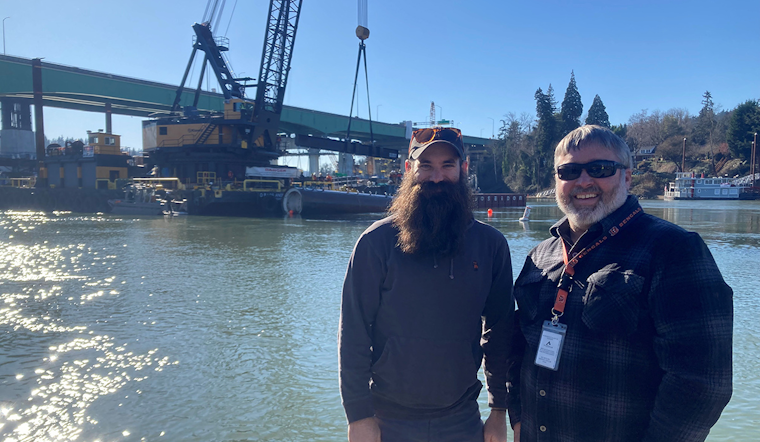
Clackamas County's subterranean infrastructure project, which has been capturing the interest of locals over recent months, has hit a significant milestone. The tunnel boring machine, fondly named "Clack-A-Mole" by community members, has completed its ½-mile excavation mission beneath the surface toward the Willamette River. The project forms part of the Tri-City Water Resource Recovery Facility Outfall Project, a major effort to build a new outfall pipeline dedicated to safely transporting treated water. According to the Clackamas County website, as of December 2nd, the 225,000 lbs behemoth had reached its final destination, ready for retrieval from the river.
Prior updates had given the public an insight into Clack-A-Mole's progress, with reports on November 26 indicating the machine was just 180 feet away from its target destination while tunneling beneath the Willamette River. An earlier November 13 update had proudly declared 80% completion of the journey to the river. On November 8, the enormity of the task was made clear when a post included a photograph of an engineer standing beside the nine-foot-diameter pipes that serve as concrete evidence of the scale of the undertaking. Back in October, with 66% of the tunnel completed, crews had mined 1,575 feet with 815 feet remaining, demonstrating the project was two-thirds of the way to completion.
The journey for Clack-A-Mole commenced earnestly in August, lined with public engagement and education about the significance of the project to the region. Conversations and coverage have highlighted not only the technical aspects and achievements of the tunnel but also the role of the facility in protecting the surrounding environment and ecosystems. Clackamas Water Environment Services (WES) invited local citizens to engage with the project, even allowing them to submit names for the TBM that would carve its way below their community.
The name "Clack-A-Mole" emerged as a crowd favorite, encapsulating the local spirit in a light-hearted, yet memorable moniker. On August 15, staff and guests gathered to meet Clack-A-Mole, marking the beginning of its journey. Over the months that followed, numerous updates served to keep the community abreast of the TBM's progress, adding transparency and fostering communal interest in infrastructure development. These ranged from fascinating snapshots of the tunnel boring machine like a statistic from September 24, which pointed out that "Clack-A-Mole is a little slower, averaging about 32 feet a day" in stark contrast to the tiny Townsend's Mole native to Oregon that can burrow up to 18 feet per hour.