

























































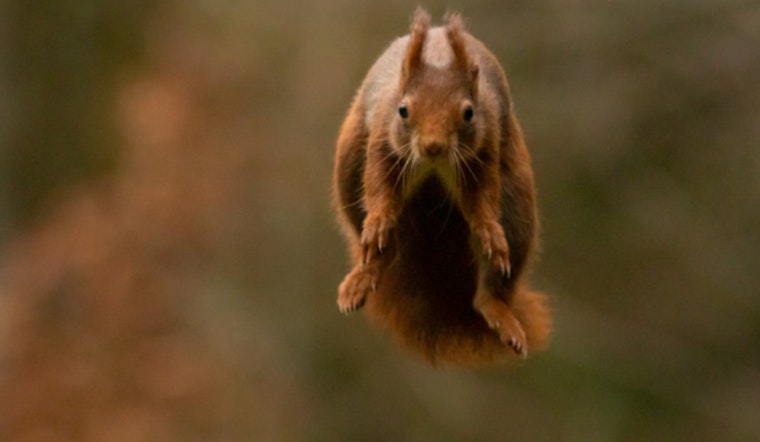
Researchers at East Tennessee State University's Gray Fossil Site and Museum found the fossilized remains of a giant flying squirrel, Miopetaurista, which lived about 5 million years ago in the southern Appalachian region. The site has uncovered a variety of prehistoric life and now adds this species to its findings. The Miopetaurista, about the size of a house cat, lived in a warmer climate than today, and its ancestors are believed to have crossed into North America from Asia via a land bridge, as mentioned by WSMV.
The discovery, published in the Journal of Mammalian Evolution, was made by a group of researchers, including Dr. Joshua Samuels of East Tennessee State University and colleagues from the Institut Català de Paleontologia in Barcelona, Spain, as reported by Phys.org. Casanovas-Vilar from the Spanish institute expressed his surprise, saying, "Finding Miopetaurista in North America was quite unexpected as this genus is only known from Eurasia."
A three-pound squirrel once lived in dense, humid forests, sharing its home with animals like rhinos, mastodons, and red pandas, according to FOX 17. The Gray Fossil Site, where the squirrel's remains were found, has also revealed fossils of a large bone-crushing dog and other top predators, including sabertooth cats.
Recent discoveries are providing insights into ancient ecosystems and the evolution of nature, including the extinction of the Miopetaurista. Montserrat Grau-Camats explained, "The last American Miopetaurista lived millions of years after all Eurasian species of this genus had disappeared, meaning at the time they were 'living fossils.'" Fossils found at East Tennessee State University offer valuable information about this species that once lived in the forests of Appalachia, as stated by Phys.org.





