

























































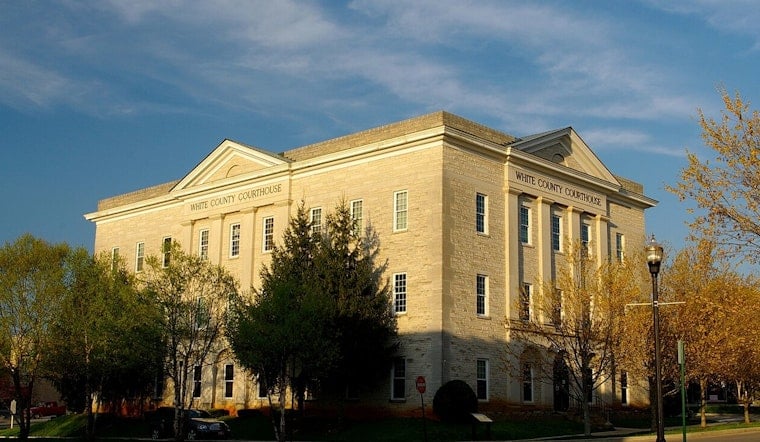
A five-acre patch of land at the end of Pleasant Hill Road near Sparta has become the first real test of White County's month-old ban on data centers, after word spread that a proposed 4.9-megawatt cryptocurrency mining operation could move forward there despite the prohibition. County officials say the project appears able to sidestep the ban entirely because of how Tennessee land-use law is written.
The White County Commission voted on July 20 to ban grid-connected AI and data center facilities countywide, but as reported by WSMV, the resolution never went through a formal zoning process. Because White County lacks comprehensive zoning, the commission's action carries little enforceable weight against a private land deal, according to Sparta Live. Weeks after the vote, the Pleasant Hill Road parcel emerged as the site putting that gap to the test.
A Loophole Built Into State Law
The property in question is just over five acres, and under Tennessee Code Annotated § 13-3-401, county regional planning commissions only have authority to review land divisions that create parcels smaller than five acres. That threshold meant the Pleasant Hill Road site never needed planning commission approval at all, per the seed facts drawn from WSMV's reporting and echoed in the statute itself.
Outgoing White County Executive Denny Wayne Robinson has said the county government does not determine who may buy or sell private property, and that White County did not fund, authorize, sign off on, or approve any infrastructure improvements for the proposed site. Robinson told WSMV that neither his office nor the county commission was informed about the project before information about it began circulating publicly. He said there has been a great deal of discussion and speculation about an alleged data center or mining facility proposed in White County, and that he is now reviewing legal options to prevent or limit the project.
Robinson has also stated publicly that the July resolution banning data centers was passed against legal advice, since local government lacks authority under state law to dictate private property transfers or enforce commercial bans absent formal zoning, the same account notes. County approval for parcels under five acres, where it does apply, is limited to matters like road access, utility availability, and compliance with existing regulations — not a broader power to block a sale outright. Property ownership and the legal transfer of that property are described as rights protected under the system of government, according to the reporting.
A Second Loophole at the State Level
Even if the county had zoning power, the proposed facility would likely dodge a separate layer of state oversight. Tennessee's House Bill 1847, enacted in May 2026, bars municipalities and electric utilities from absorbing infrastructure costs for data centers and requires impact studies — but only for projects with peak electrical demand of 50 megawatts or more, according to LegiScan. At 4.9 megawatts, the Pleasant Hill Road project falls dramatically below that line.
Sparta Live's reporting notes that 58 of the 60 data centers operating or under development across Tennessee in 2026 fall under that 50-megawatt statutory threshold, leaving the overwhelming majority of the state's crypto and AI infrastructure buildout effectively unregulated at the state level. Developers of smaller mining facilities frequently size their projects just under the cutoff, avoiding the feasibility studies larger operations must undergo.
A City Next Door Took a Different Path
The nearby City of Sparta took a different route earlier in 2026, placing a municipal moratorium on data centers so it could study local noise, water, and power grid impacts before allowing new projects. Because Sparta is incorporated, it holds zoning authority the county does not — a distinction that has left rural, unzoned parts of White County exposed in ways the city is not, per Sparta Live's account.
The dispute is unfolding amid a leadership shakeup in White County. Kyle Goff defeated 12-year incumbent Robinson in the May 2026 Republican primary and went on to win the August 6 general election with 77.56% of the vote, according to the Main Street Journal. Goff, who reported the project's 4.9-megawatt capacity publicly, takes office alongside a largely new county commission, leaving Robinson to weigh legal options in his final weeks. White County commissioners are set to meet on August 17.
Part of a Larger Statewide Pattern
White County's predicament mirrors a wave of local pushback playing out across Tennessee this year. A July 2026 report by ThinkTennessee found that residential electricity customers statewide are shouldering a growing share of utility infrastructure costs compared to commercial users, as data center expansion outpaces local oversight, according to reporting cited by WKRN.
More than a dozen Middle and East Tennessee governments — including Gallatin, Anderson County, La Vergne, Roane County, McMinnville, and Knox County — passed data center moratoriums or strict zoning limits between May and July, part of a trend Hoodline has tracked closely in Knoxville and beyond. White County's experience shows what happens when a county tries to join that wave without the zoning infrastructure to back it up — leaving a resolution-based ban to run headlong into a state legal framework built to protect private property transfers and mid-sized developments alike.





