

























































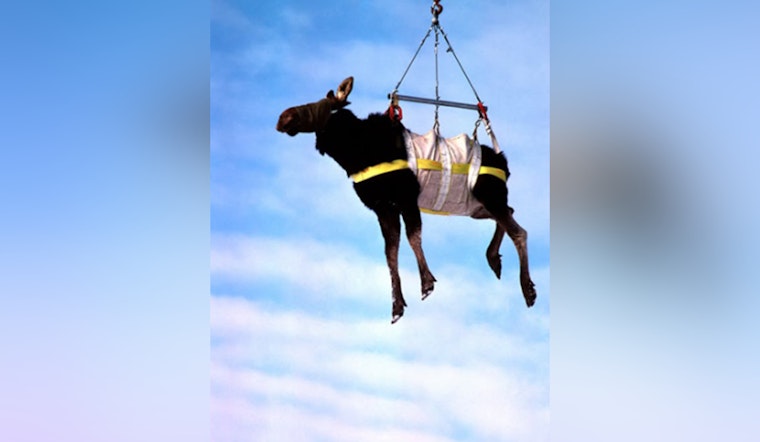
The Michigan Department of Natural Resources, with partners like the Keweenaw Bay Indian Community and Northern Michigan University, is conducting a two-year study to investigate moose population stagnation. They will collar 60 moose, starting with 20 this winter in the Michigamme Highlands. According to MLive, spotter planes, snowmobiles, and helicopters will be used to locate and sedate the animals for collaring.
The Michigan Department of Natural Resources is studying factors limiting moose population growth, which has remained below 1% annually since 2009. FOX 2 Detroit referenced the "Moose Lift," a 1980s relocation effort, with current numbers at 400, below the 1,000-moose goal set for 2000. The research aims to "understand population trends and what challenges the moose may be facing," focusing on disease, predation, and environmental stressors, as reported by WOODTV.
Moose play a vital role in Michigan’s ecosystem, as "both the presence and absence of moose can affect forest growth, creating cascading effects throughout the habitat, impacting deer, birds, insects and plant life," wildlife specialist Tyler Petroelje told Mlive. Researchers, including Diana Lafferty of Northern Michigan University, are studying moose populations to understand factors like climate and species interactions affecting their growth. The public is urged to keep a safe distance during the capture-and-collar phase, while the Michigan Department of Natural Resources shares updates through social media and news platforms.





