

























































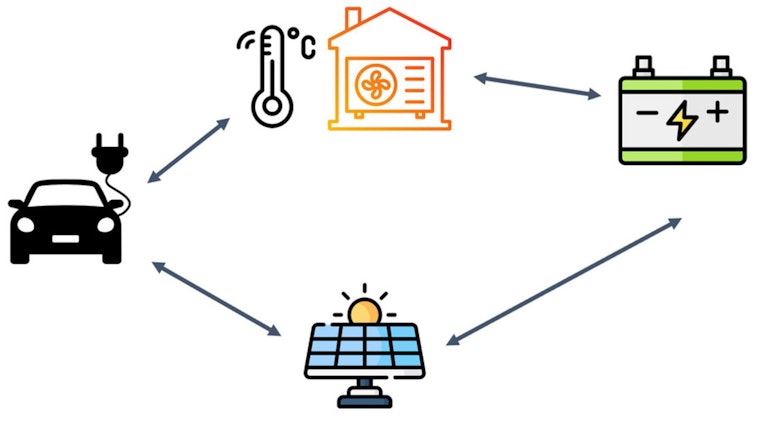
As climate concerns drive innovation, MIT engineers are suggesting a new way to shore up power grid resilience by leveraging homeowner technology, including rooftop panels, EV chargers, and smart thermostats. According to a recent MIT News report, such "grid-edge" devices could form a decentralized network to offer backup power in emergencies, mitigating the effects of cyberattacks or natural disasters.
The study lays out a blueprint for a so-called "local electricity market" enabling device owners to contribute to microgrids by temporarily loaning their device's energy or adjusting consumption. Anu Annaswamy, a research scientist in MIT’s Department of Mechanical Engineering, highlighted the collective potential, stating, "If we can harness our smart dishwashers, rooftop panels, and EVs, and put our combined shoulders to the wheel, we can really have a resilient grid," according to MIT News.
The proposed system's efficiency hinge on an algorithm designed to quickly assess grid-edge devices for trustworthiness, determining how they can best contribute to power grid stabilization. For instance, during a cyber attack, these devices could compensate for the compromised infrastructure, either by injecting power into the grid or reducing demand, hence mitigating blackout risks. Vineet Nair, the lead author of the study, explained the versatility of the network in an MIT News interview, saying, "So, our algorithm decides which of those houses can step in to either provide extra power generation to inject into the grid or reduce their demand to meet the shortfall."
This innovative approach not only capitalizes on the increasing number of grid-edge devices but also aligns with societal efforts to decarbonize through distributed energy resources. However, transitioning to this new paradigm entails customer engagement, policy reform, and technological advancements such as advanced power inverters that enable two-way power flow. As MIT's research team acknowledges, creating local electricity markets to utilize these resources is just beginning, a "good start" into reimagining power grid management for increased resilience and adaptability, as Annaswamy informed MIT News.


