

























































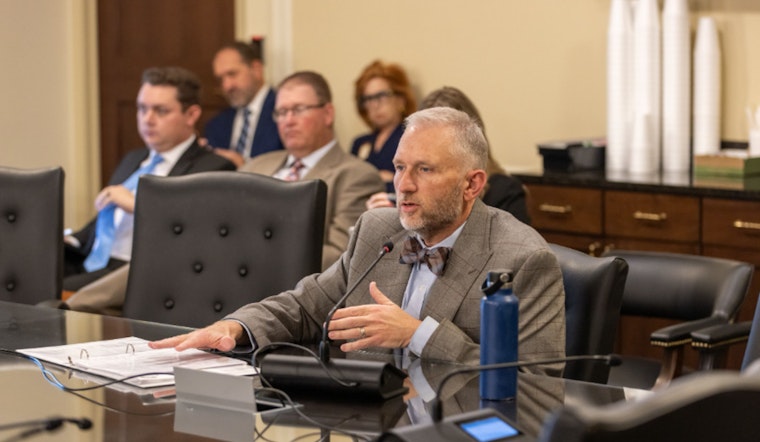
The move to keep students' fingers off their phones and on the pulse of their education has cleared its first hurdle in Oklahoma. The state's House Education Oversight Committee, in a unanimous decision, has given the green light to a "Bell to Bell, No Cell" policy that aims to remove the distraction of cellular devices from the classroom. The Oklahoma House of Representatives reports that the bill will be put before the House later this week as part of an expedited legislative process.
House Bill 1276, penned by Chairman Chad Caldwell, hopes to combat the negative impacts of cell phone usage on students' academic performances and mental health. Despite the unanimous support the bill has received thus far, it carries the weight of controversy, as educators and parents alike grapple with the balance of digital convenience and educational focus. "We have all seen the data and research showing the alarming effects of cell phone use among young students, and we have to take a stand against something we know is harming our kids' academic outcomes and mental health," Caldwell explained, as reported by the Oklahoma House of Representatives.
The proposed legislation doesn't just cast smartphones aside; it also encompasses personal electronic devices such as smartwatches within its scope. However, the bill is not without flexibility. A stipulation has been included for emergency uses, inclusive of those deriving from medical requirements. Furthermore, it leaves room for each school district to finesse its approach to implementing the ban, acknowledging the diverse needs and contexts of schools across Oklahoma.
"What makes sense for my high school that graduated 33 students in Depew Oklahoma is not what likely will make sense for Oklahoma City Public Schools," stated House Speaker Kyle Hilbert, reinforcing the idea that one size doesn't fit all. The bill, as it stands, allows school boards the liberty to approve cell phone usage policies on an annual basis, should they see fit. This decision is reflective of a bigger picture; one that recognizes the importance of local governance in education, and seeks to empower districts to adapt to their unique climates, as per the Oklahoma House of Representatives.
As the legislative process unfolds, school boards are expected to hash out their policies well in advance of the next academic year. This forward momentum, indicative of alignment among the House, Senate, and Governor, signals an imminent change on the horizon—one that puts Oklahoma's students and educators in focus, cell phone-free.




