

























































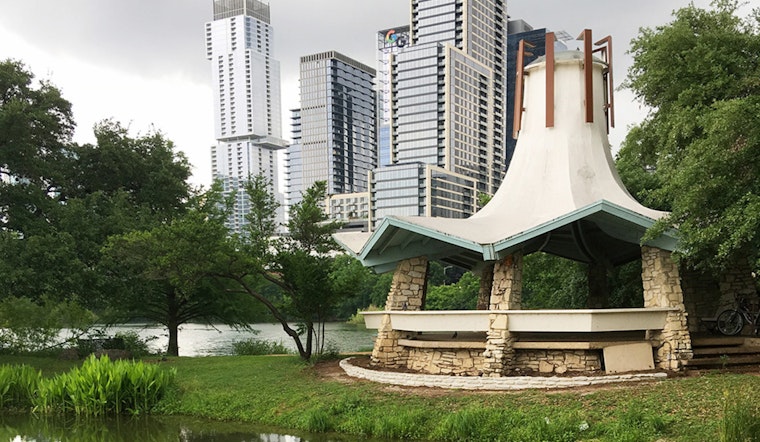
The Fannie Davis Gazebo, a notable structure in Austin's Vic Mathias Shores, has been honored with the City of Austin Historic Landmark designation, as of the February 27 City Council meeting. This recognition was given for its cultural and architectural importance to the community.
Constructed in 1969 on the southern banks of what used to be Town Lake, now known as Lady Bird Lake, the gazebo was the seminal public edifice aimed at enhancing the lake's scenery following the erection of Longhorn Dam a decade prior. The initiative to construct the gazebo was driven by the Austin Chapter of the National Association of Women in Construction (NAWIC), a group that, since the 1950s, has supported women within the construction trade. This league of thirty-five witting women in Austin saw an opportunity to create a public retreat by the lakeshore, in dedication to the construction industry they represented.
Driven by inspiration from environmental pioneer Lady Bird Johnson, who also served as the honorary co-chair of the Town Lake Beautification Committee, the local NAWIC chapter began fundraising in 1965. By the time the structure was inaugurated in June 1970, it had garnered substantial support from nearly 100 contractors and suppliers, who contributed materials and labor. "The Fannie Davis Gazebo was one of the first structures on Austin’s hike and bike trail. The Austin Chapter of Women in Construction not only built it, but has also maintained and restored it since 1970. We are proud to see this history recognized," Ellen Colfax, Austin Parks and Recreation's Historic Preservation and Heritage Tourism Program Manager, told austintexas.gov.
J. Sterry Nill, the architect behind the gazebo's design, gave it the form of an inverted morning glory flower. The design captures the eclectic architectural currents of the '60s while giving a nod to Frank Lloyd Wright’s geometric innovation. Moreover, it embodies a harmonious blend of modern shapes with organic materials, characteristic of the rustic park architectures that populate Central Texas. "The gazebo is one of Austin’s modern architectural gems, hidden in plain sight," Jesús Aguirre, Director of Austin Parks and Recreation, remarked. With the newly acquired City of Austin Historic Landmark status, public attention is expected to turn towards this noteworthy structure and the pivotal role played by the Women in Construction's endeavor to beautify the Lady Bird Lake shores.





