

























































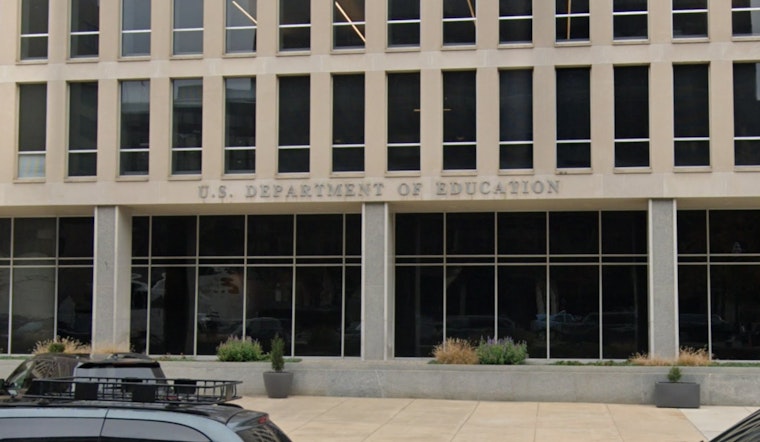
The Healey-Driscoll Administration has raised deep concerns over the recent action by former President Donald Trump to dismantle the U.S. Department of Education. In a statement obtained by the Commonwealth of Massachusetts, Governor Maura Healey criticized the move. "We're proud that Massachusetts has the best schools in the nation – and it's why we know that shutting down the U.S. Department of Education is bad for students, teachers, and schools," she said, asserting that Trump's claim of empowering states does not align with the detriment to essential educational programs and funding that such an action would cause. This, she noted, would likely lead to increased class sizes and the cancellation of critical after-school programs, especially harming rural communities and students with special needs.
Lieutenant Governor Kim Driscoll echoed Healey's concerns, emphasizing the significance of federal funding for local education. "I chaired a School Committee, and I know what these federal dollars mean for our kids locally – supporting students with special needs, feeding students, keeping reading specialists in the classroom," Driscoll highlighted on the official website of the Commonwealth of Massachusetts. She expressed worry over President Trump's actions, which put significant educational resources at risk. Education Secretary Dr. Patrick Tutwiler weighed in as well, referencing his background as a history teacher to underline the importance of public education to a functioning democracy and the gravity of protecting students' civil rights in this context.
Not only education officials but also those from labor and economic sectors shared their unease. "President Trump's order to dismantle the US Department of Education guts a system intended to prepare students for our future workforce," said Labor and Workforce Development Secretary Lauren Jones. Economic Development Secretary Yvonne Hao pointed out that the elimination of the Education Department strikes at the heart of Massachusetts' economic engine, which thrives on the synergy between education and economic opportunity, as detailed by the Commonwealth of Massachusetts. These remarks highlight the perceived interconnectedness of educational infrastructure and the state's broader economic well-being.
Massachusetts heavily relies on federal education funding, to the tune of over $2 billion annually, funds that the state is not equipped to replace on its own. This substantial financial injection supports a vast array of educational services and provisions, from college affordability initiatives for low- and middle-income students to specialized education and support for districts in low-income areas, including teacher salaries, counselors, and liaisons for the homeless. Also highlighted were the specialised services for students with disabilities, professional development resources, and essential transportation for students accessing various programs and services, such as physical and speech therapy.





