

























































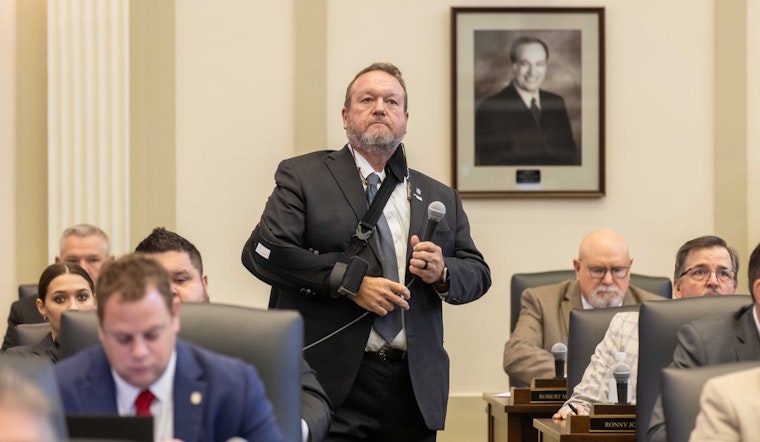
In a decisive move, the Oklahoma House of Representatives has advanced a bill aimed at reducing insulin costs for residents. House Bill 1380, spearheaded by Rep. Eddy Dempsey, R-Valliant, passed with a majority of 77-13 votes and is now headed to the Senate. "No one should have to ration their insulin or go without it because of its cost," Dempsey stated, highlighting the bill's ambition to prevent Oklahomans from having to sacrifice essential medication, as reported by the Oklahoma House of Representatives.
Under the bill, the Insulin Access and Affordability Program would be introduced within the Oklahoma State Department of Health, a measure proposed to foster market competition, lower healthcare costs, and tackle the scarcity of generic drugs. Acknowledging his own battle with diabetes and the loss of a close friend due to affordability issues, Dempsey told House Media, “For too many Oklahomans, insulin is either out of reach financially or in short supply.” The bill's passage underscores the legislative body's commitment to public health and echoes Dempsey's personal stake in the issue.
The proposed legislation would grant the health department the authority to work alongside nonprofit drug manufacturers and support the establishment and execution of essential contracts to promote insulin production and distribution. This cooperative approach seeks to ensure that those in need of this critical medication can obtain it without undue financial strain. Additional details of the plan can be found in the press release by the Oklahoma House.
If passed by the Senate and enacted into law, HB1380 is set to go into effect on July 1. Dempsey hopes that this legislation will spare families the grief of losing loved ones because they could not afford or access adequate medical treatment. “If we can prevent even one more family from enduring the pain of losing a loved one to this disease, then we’ve done something truly meaningful,” he said. The upcoming Senate review will determine if this patient-centric initiative becomes a tangible reality for Oklahomans struggling to manage the costs of their healthcare needs.





