

























































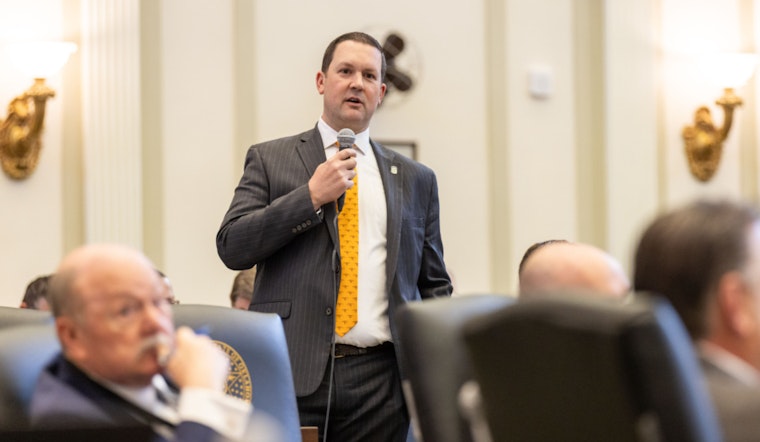
Oklahoma's process for vetting and selecting judicial appointees is poised to potentially undergo significant changes following the House's recent passage of two reform measures. These legislative efforts aim to revise the workings of the state's Judicial Nominating Commission (JNC), a body responsible for shortlisting judicial candidates for gubernatorial appointments.
The JNC, established in 1967, may see a restructuring should voters approve House Joint Resolution 1024, which proposes a constitutional amendment altering commission membership and tenure. To be more reflective of the state’s congressional districts, this resolution, if passed, would require that the JNC include at least one member from each district at the time of their appointment. Speaker Pro Tem Anthony Moore, R-Clinton, purported to articulate the voice of modernity, saying, "A majority of Oklahomans are ready to modernize how state judicial applicants are vetted and appointed," and emphasizing the need for the judiciary to "remains above reproach," as reported by the Oklahoma House of Representatives' website.
In a parallel effort, House Bill 2103 seeks to update the JNC's statutory provisions, introducing conflict of interest safeguards and transparency requirements. This includes banning JNC members from influencing decisions if related to a nominee up to the third degree of consanguinity or by marriage. Sanctions for violations and a mandate for disclosure of contributions to judicial campaigns by applicants are also part of the bill.
House Speaker Kyle Hilbert, R-Bristow, indicated that the objective is to ensure that those "most familiar with the law to promote judicial candidates that have demonstrated a strong record of competence," according to the Oklahoma House. He elaborated that the bills aim to benefit the public while preserving the integrity of the judicial system. Critics and supporters alike are now looking to the Senate, where Senator Todd Gollihare, R-Kellyville, sponsors the measures. The question on everyone's mind is whether these reforms will indeed bolster the judicature's ability to impartially interpret and administer the law or, potentially, to introduce a greater measure of political influence into the judiciary's composition.
As these measures now move to the Senate, discussions and debate will likely intensify around the implications of altering a process that shapes the state judiciary's landscape. The eventual outcome of these bills could mark a significant shift in how Oklahoma approaches the intricate balance of legal expertise and political representation in its courts for years to come.





