

























































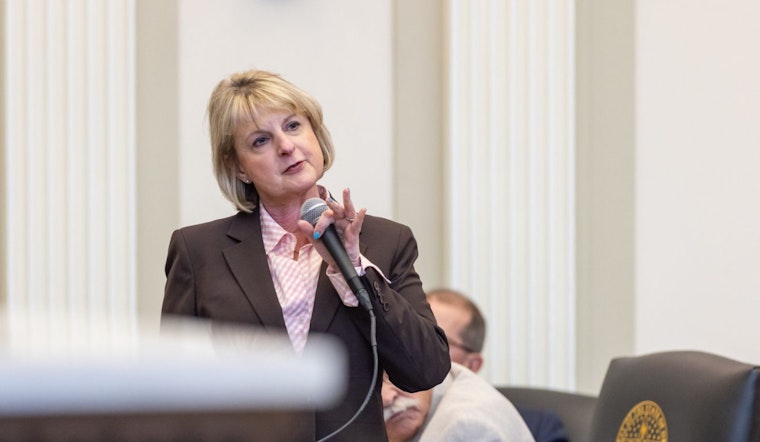
In a move that could significantly alter the landscape of reproductive health and legal boundaries, Rep. Denise Crosswhite Hader, R-Piedmont, has ushered a new bill through the House aimed at curbing what she views as the illicit distribution of abortion-inducing drugs. The legislation, known as House Bill 1168, designates trafficking of such drugs as a felony offense, penalizing individuals who are found to knowingly deliver abortion-inducing drugs to those intending to use them for terminating a pregnancy, as reported by The Oklahoma House of Representatives.
The details of HB1168 sketch out a direct challenge to those operating outside the boundaries of established medical channels, with punishments that include a fine of up to $100,000 and/or up to 10 years in prison. Crosswhite Hader has emphasized that this legislation targets distributors and excludes pharmacists, manufacturers, or distributors conducting lawful business. She stated, "Women considering an abortion are already in a vulnerable state, They don't need someone willing to skirt the law or to try to profit from such vulnerability and provide them with an abortion-inducing drug that could create great harm to them physically and mentally." This sentiment mirrors concerns that improper use of these drugs could result in serious health risks, including thwarting the ability to carry to term a pregnancy in the future.
The bill draws a hard line on drug trafficking, yet makes distinct provisions for those obtaining abortion-inducing drugs for their own use. This legal maneuver may create a complex enforcement landscape, where the act of distribution is criminalized, while possession for personal use skirts the law's edge. Crosswhite Hader, concerned with the physical and psychological impact on women, told The Oklahoma House, "I'm concerned that a woman given these drugs to take in isolation could die by herself, and they could keep her from being able to carry to term a pregnancy at a later date should that be desired."
Reports, highlighted by Crosswhite Hader, have brought attention to instances where only the second drug in a two-drug regimen is administered, a practice that increases health risks for women. Just as penalties exist for adults distributing alcohol to minors, HB1168 intends to serve as a deterrent against the distribution of abortion-inducing drugs. The consequences set forth by this bill echo the severity of penalties for those performing illegal abortions under current law. "Even more alarming," she said, "are reports that only the second drug in a two-drug sequence are being given in some instances."
With the bill now passed by the House, its fate rests in the hands of the Senate, where the bill's Senate counterpart will be authored by Sen. David Bullard, R-Durant. Observers and stakeholders await the Senate's reception of HB1168, a legislation that could have far-reaching effects on how abortion-inducing drugs are dispensed and managed within the state of Oklahoma.





