

























































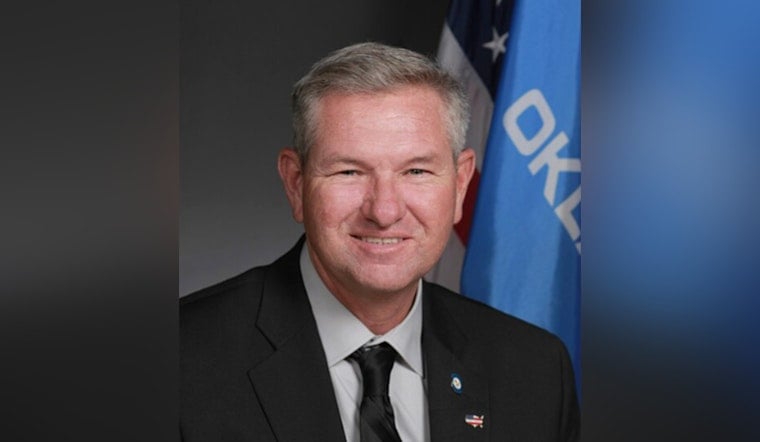
Voters across a swath of southeast Oklahoma will settle their state House race for good on August 25, when incumbent Rep. David Smith and challenger Pamela Gordon meet in a Republican runoff that will decide the House District 18 seat without a November ballot. No Democratic, Libertarian, or independent candidates filed for the seat this year, so whoever wins the closed GOP primary runoff will be declared the winner outright under Oklahoma election law.
The runoff was triggered because Smith fell short of the majority needed to win outright in the June 16 primary, taking 47.4 percent of the vote against Gordon's 30.5 percent and a third candidate, Shelton Foster, who collected 22.1 percent, according to NonDoc Media. Smith received 1,760 votes, Gordon took 1,133, and Foster earned 821, with Oklahoma's election statute requiring a candidate to clear 50 percent of the total vote to avoid a runoff, per the Oklahoma State Election Board. Because the runoff is closed, only registered Republicans living in the district can cast a ballot on August 25.
Smith, a U.S. Army veteran first elected to the seat in 2018, is seeking a fifth term and says his motivation for running again is simply the people he represents, according to the NonDoc report. If reelected, he would enter his ninth and tenth years in a legislature that caps combined House and Senate service at 12 years under a 1990 constitutional amendment, according to Ballotpedia. Gordon, a retired rural school superintendent, has framed her campaign around the belief that the district has not received enough advocacy from its current representative, telling NonDoc there is not enough advocacy for HD 18.
A District Stretching From Choctaw to Muscogee Land
House District 18 covers all of Hughes County plus parts of Pittsburg, Coal, and Okfuskee counties, taking in communities including Calvin, McAlester, Holdenville, Okemah, Wetumka, Weleetka, Boley, and Paden, per the NonDoc account. The district crosses the boundary between the Muscogee Nation and Choctaw Nation reservations. Gordon earned degrees from East Central University in 1984 and Southeastern Oklahoma State University in 1996 and went on to work as a rural school superintendent in Oklahoma, Texas, and Tennessee before joining the Oklahoma State Department of Education, according to Civoren. There, she led the department's grant writing program under State Superintendent Ryan Walters before resigning, a role also described in the NonDoc reporting.
Education is the issue Gordon says pushed her into the race, and she has argued that rural public schools face challenges distinct from those confronting districts in Oklahoma City and Tulsa. Smith, for his part, points to legislative wins during his tenure, including his work with fellow lawmakers on the Strong Readers Act, which funded reading coaches for third-grade students, and money set aside for books. He has also highlighted a grant program he introduced to provide clothing allowances for rural volunteer firefighters, an effort Hoodline previously reported emerged amid a statewide recruitment crisis among small-town fire departments.
Project Emerald Looms Over the Race
The dominant issue in the runoff is the proposed data center campus south of Kiowa, a project both candidates say concerns them. Known as Project Emerald, the facility proposed by Australian firm IREN is designed as a 2,000-acre campus with up to 1,600 megawatts of power capacity and an estimated $50 billion investment across two phases, according to Cleanview. Potential data center development stretches between House District 18 and neighboring House District 17 along U.S. Highway 69, per NonDoc's reporting.
Pittsburg County's Tax Incentive District review committee voted in April to advance an economic plan for the project that includes a steep property tax abatement, though the figures cited differ: Hoodline's earlier coverage put the abatement at 85 percent over up to 25 years, while NonDoc reports the data center developer is seeking a 75 percent property tax abatement for the Kiowa site. That earlier Hoodline reporting also detailed pushback from Rural Water District No. 11 officials over water consumption and electrical grid strain tied to the project, concerns Smith has echoed. Smith is concerned about potential data centers' demands on water and electricity and says he opposes nondisclosure agreements that prevent residents from knowing about development proposals, while also stating that he supports constituents who oppose data center projects outright.
Gordon has attended several meetings about the data center proposal and has called for state officials to establish more safeguards before such projects move forward. She has also said she opposes the data center project specifically if it is foreign-owned. Both candidates' concerns echo a broader pattern playing out statewide: municipalities including Oklahoma City, Tulsa, Pawhuska, and Norman enacted temporary moratoriums through late 2026 or mid-2027 to pause new data center applications while studying grid strain and water consumption, according to The Infrastructure Thesis.
Farms, Jobs, and Institutional Backing
Beyond the data center fight, Gordon has highlighted challenges facing small farms and ranches, saying small agricultural operations struggle with land prices, financing, and profitability. She has called for state-level representation to work more closely with local governments to recruit family-supporting employers and says the district should attract more industry and better-paying jobs. Gordon has said she plans to bring a more active approach to the HD 18 office if elected and has pledged to keep constituents informed about her actions in office.
Smith counters that he has worked directly with companies considering locations in the district, including efforts to help bring a trucking company and an air conditioning company to HD 18, and an attempt to attract a hemp textile manufacturing operation to the area. He has also cited legislation aligning Oklahoma's hemp regulations with federal standards and said he worked with agricultural organizations on legislation benefiting the district. Smith told NonDoc he ran every bill his constituents asked him to run except one, and said he and other lawmakers focused on listening to local superintendents about school needs. He had four measures pass during the most recent legislative session.
The incumbent has locked up major institutional support heading into the runoff. The Oklahoma Farm Bureau Ag Fund political action committee reaffirmed its endorsement of Smith on August 6, according to the Oklahoma Farm Bureau, while the National Rifle Association Political Victory Fund gave him an A rating and endorsement, per the NRA Political Victory Fund.
How and When to Vote
Early voting runs from 8 a.m. to 6 p.m. on August 20 and 21, with an additional early voting window from 8 a.m. to 2 p.m. on August 22. Polls will be open from 7 a.m. to 7 p.m. on August 25, when HD 18 voters make their final call between Smith and Gordon. The NonDoc report on the race was written by Derrick James, a Pittsburg County native and Choctaw Nation citizen who joined the outlet's newsroom in September 2025 after seven years as a reporter and editor at the McAlester News-Capital.





