

























































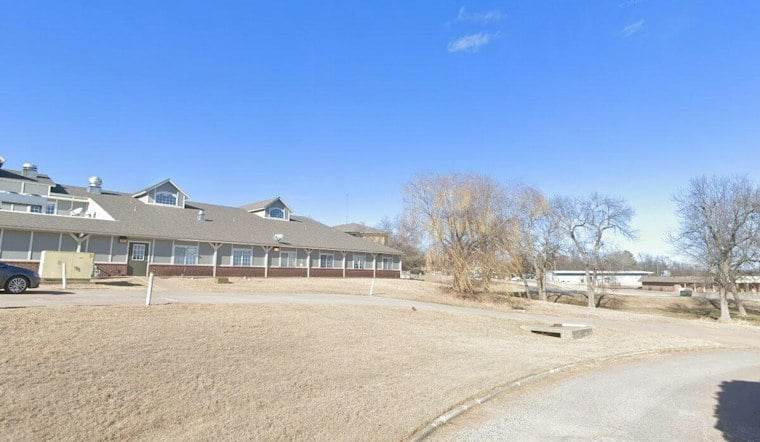
New data identifies 44 Oklahoma rural hospitals as at risk of closing. Pauls Valley and Stilwell have both seen hospitals shut down, but the publicly reported circumstances differ: Pauls Valley’s Valley Community Hospital closed amid reported financial shortfalls, while no specific reason was publicly given for the separate Stilwell closure. The closures underscore the stakes for other rural communities whose facilities are struggling to stay open.
The 44-hospital figure comes from data that Larry Hightower, co-founder of VxTra Health, worked on, according to KFOR. It is just the latest in a string of Oklahoma risk counts that have circulated this year, and the numbers do not all agree. An August report cited by The Oklahoman put the number at 45, while OKC FOX reported a Center for Health Care Quality and Payment Reform analysis that also found 45 of Oklahoma's 73 rural hospitals at risk, including 18 at immediate risk. A separate, earlier KFOR report had put the number even higher, at 63 of 73 open rural inpatient hospitals, with 18 at immediate risk, and the Tahlequah Daily Press reported a Center for Healthcare Quality and Payment Reform count of 47 at-risk hospitals, 23 of them at immediate risk. The discrepancies reflect different reports issued at different times rather than a single, settled count.
Payment Delays Squeeze Already Thin Margins
Experts interviewed say Oklahoma's rural hospitals face closure risks driven by both funding cuts and problems collecting what they're owed from private insurers. Rich Rasmussen, president and CEO of the Oklahoma Hospital Association, said hospitals have been squeezed from multiple directions at once. “In addition to these Medicaid cuts, we also experienced challenges as it relates to being paid in a timely manner,” Rasmussen told the station.
Hightower said those payment problems can mean hospitals do not collect all the money they are owed, not just that they receive it late. For rural hospitals with thin margins, he said, even relatively small daily shortfalls can be consequential, particularly when they lack cash reserves to absorb irregular payments.
Medicare Advantage Versus Traditional Medicare
Rasmussen said traditional Medicare reimburses rural hospitals promptly and at the maximum allowed under federal law. Medicare Advantage plans, he said, are not obligated to pay in the same way. Small hospitals, with low margins and fewer patients, must manage their available funds carefully.
Rasmussen expects Medicare Advantage to be a central issue for Congress and has urged seniors to compare it with traditional Medicare before deciding to waive their Medicare rights. Rasmussen and Hightower said they hope Congress will address the underlying payment issues; Rasmussen said lawmakers were running out of time before the end of the year. The experts also urged Oklahomans to pay close attention when enrolling in health insurance and choose plans that fit their budgets.
Medicaid Cuts Add to the Pressure
The payment pressures are compounding changes to Oklahoma's Medicaid funding. Oklahoma's Medicaid directed-payment program was projected to decrease from $1.08 billion to $872 million for the 2027 state fiscal year, according to KGOU. Rasmussen told OKC FOX that the 2027 changes would reduce those supplemental Medicaid payments to hospitals; the projected change to the directed-payment program is only part of the overall supplemental-payment picture.
The strain isn't new. The Oklahoman reported that as of December 2024, 79% of Oklahoma's rural hospitals operated with losses on services, with 51% at risk of closing and 32% at immediate risk. Pauls Valley's experience shows how precarious that math can be: its Valley Community Hospital closed again in January 2025, with its owner and CEO attributing the decision to monthly shortfalls well into six figures, according to the same Oklahoman report. That closure came just four years after the hospital had reopened through Southern Plains Medical Group in April 2021, following an earlier 2018 closure.
Closures and Medicaid payments in context
The Pauls Valley and Stilwell closures were separate events with different publicly reported explanations. Valley Community Hospital announced another closure in January 2025, and owner and CEO Madhukar Sharma cited monthly shortfalls well into six figures, according to The Oklahoman. For the separate Stilwell Memorial Hospital closure reported in June 2025, News On 6 said no specific reason had been given publicly; it should not be attributed to funding problems without further evidence. The projected directed-payment decrease for the 2027 state fiscal year does not represent an equivalent net reduction across supplemental payments. KOSU reported that while the directed-payment program is projected to fall from $1.08 billion to $872 million, the fee-for-service supplemental payment is set to increase from $300 million to $500 million, mostly offsetting the projected change.
A National Problem, Not Just an Oklahoma One
Oklahoma's struggles mirror a national trend. A report from the Center for Healthcare Quality and Payment Reform found that losses on private insurance patients are the biggest cause of overall losses at the rural hospitals it considers at risk, and that more than 40% of rural hospitals nationwide lose money delivering patient services. The same report estimates that increasing payments to levels sufficient to prevent closures among at-risk hospitals would cost about $4 billion per year, and notes that more than 100 rural hospitals nationwide closed between 2015 and 2026, with 56 more eliminating inpatient services since the start of 2023 to qualify for Rural Emergency Hospital grants.
An October 28 analysis from Becker's Hospital Review put the national count at 698 rural hospitals at risk of closing, roughly one-third of all rural facilities in the country, with 260 of those facing immediate risk. That figure was slightly lower than a July analysis, which found 700 hospitals at risk and 264 at immediate risk, and a May report that counted 720 at risk with 294 at immediate risk.
Some Oklahoma facilities have adapted to survive rather than close outright. Rural Wellness Stroud, for instance, relies heavily on swing-bed care for post-acute patients, with about 90% of its 25 beds used that way, according to KGOU. Arbuckle Memorial Hospital in Sulphur has focused on emergency care, primary care, and basic diagnostics, leaning on its critical-access-hospital status to secure cost-based Medicare reimbursement. OKC FOX reported that the Oklahoma risk figures circulating this year are based on hospitals' most recent Medicare Cost Reports filed with the federal government through CMS, a data source that underlies much of the ongoing debate over how many Oklahoma hospitals are truly on the brink.




