

























































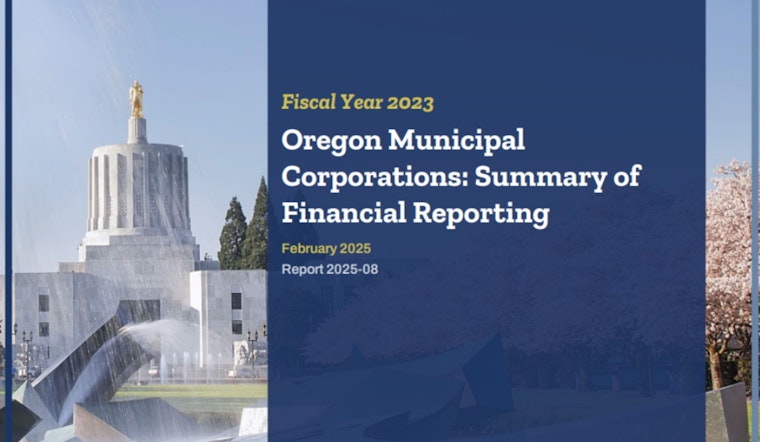
Several municipal corporations in Oregon have been dragging their heels in submitting crucial financial reports to the state's Municipal Audit Program, striking a record since 2017, a report from the Secretary of State indicates. As per the summary report, a total of 106 municipalities are more than a year behind on their filings, a significant leap from the 19 delinquent entities observed nearly eight years ago.
Secretary of State Tobias Read underlined the significance of transparency in government, saying on the State of Oregon's official website, "These financial reports are a critical way we hold local governments accountable to the public." He went on to stress that delays in submission can erode the public's trust in a local government's ability to manage public funds responsibly. Oregon's Municipal Audit Law mandates that municipal corporations, including counties, cities, and school districts, submit their yearly financials, which, for most, means an audit conducted by a certified public accountant.
The report sheds light on the stress points causing these delays. It's not just procrastination; a significant cause is the thinning number of available certified auditors, with many firms turning away from government work due to mergers and retirements, among other reasons. These developments leave municipalities scrambling for resources and personnel necessary to meet their reporting obligations.
The lack of a strong stick to ensure compliance complicates the landscape further. While the Secretary of State's Office favors education over punishment to coax municipalities into filing on time, there are repercussions looming for the delinquent. As the summary report pointed out, entities avoiding their filing duties could face challenges in managing their debt and fundraising capabilities, with even the possibility of dissolution hanging over particularly negligent special districts.
Despite the difficulties, municipalities are afforded a chance to catch up, with the Secretary of State's Office granting a large majority of extension requests they received for 2023. With an approval rate of 82%, akin to the past five-year average, the Secretary's approach leaves room for municipalities to right their ships amidst turbulent bureaucratic waters.





