

























































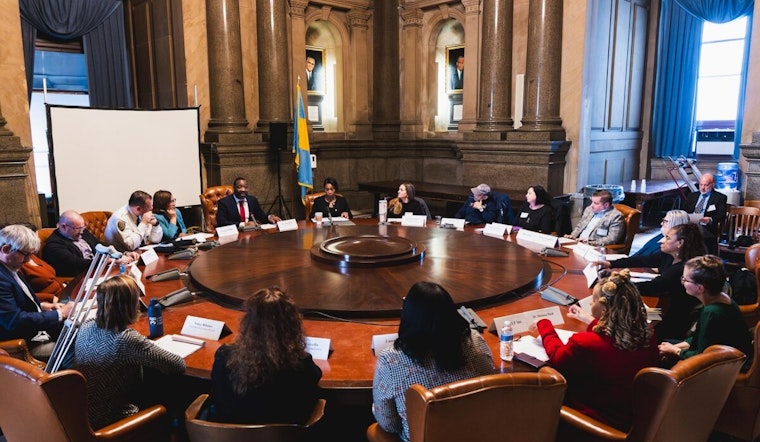
With homelessness on the rise, Philadelphia City Council President Kenyatta Johnson convened a critical roundtable discussion designed to tackle the city's deepening crisis. On February 26, stakeholders and advocates gathered inside the Council Caucus Room, rolling up their sleeves to hash out strategies for reducing the number of people without homes on Philly's streets. This get-together was grounded in the alarming data from the 2024 Point-In-Time homelessness count, as reported by Philadelphia’s Office of Homeless Services, which painted a grim picture: Homelessness figures in the city have surged for the third year in a row.
According to the count, the homeless population in Philadelphia spiked to 5,191, a 10% increase from the preceding year. Nested in these numbers is an even more troubling trend: the count of unsheltered individuals—those completely bereft of any form of shelter—soared by 38% from the year prior, reaching an alarming 976 people. These figures signal not just a challenge but a clarion call for immediate, effective measures to stem the tide of this social crisis, which has impressively gathered a 16% increase from the winter of 2020.
Council President Johnson, who has kept affordable housing advocacy at the heart of his political beat, is pushing for policy advancements to assure that all Philadelphians have the means to secure safe, stable habitation. The roundtable, hosting a candid exchange between local service providers and advocates, aimed squarely at collusion and conversation on the most impactful methods to counteract the systemic causes at the root of homelessness and to carve out enduring solutions.
Deliberations during the meeting spanned several vital subjects, linking the available subjects, namely expanding and preserving affordable housing, strengthening protections for renters to prevent displacement, and focusing assistance on populations teetering precariously at the brink of homelessness. Discussions also steered into the intersection of homelessness with Health Care, Mental Health Care, and Behavioral Health Care sectors, as well as the detrimental impact of punitive policies on the lives of those without homes – hinting at alternative pathways that advance permanent housing solutions. Another critical objective discussed, as reported by Philly's council website, was how to ameliorate coordination, dial in the accuracy of data, and reinforce emergency response mechanisms.




