

























































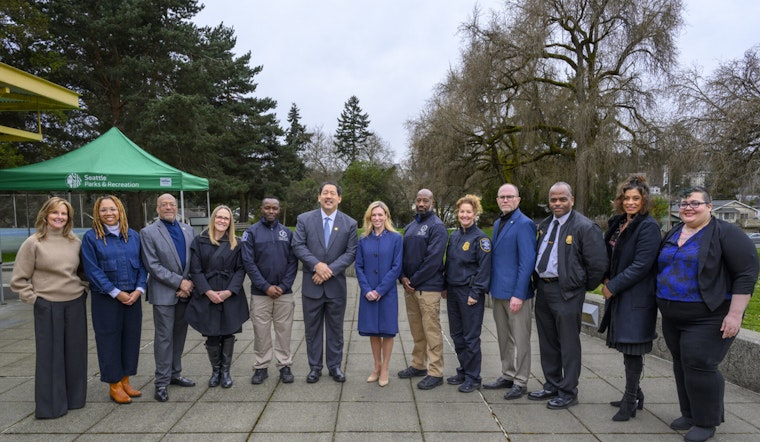
Seattle's approach to public safety is breaking new ground with Mayor Bruce Harrell announcing the citywide expansion of the Community Emergency Assistance and Rescue (CARE) department responders, a third city department dedicated to non-police emergency response, particularly behavioral health crises. Following the success of a downtown pilot, CARE responders are now operational in South and Southwest Seattle, according to a statement from the Mayor's office.
This expansion is indicative of the demand for such services, as demonstrated by the 1,700 events that CARE responders have been involved in since their inception in late 2023, and nearly half of these occurred in just the first few months of 2025 demonstrating the escalating needs of the communities they serve. These CARE responders work in two-person teams, providing coverage from noon to 10:00 p.m. every day across three zones in the city. "The CARE department has proven their ability to deliver on Seattle’s long-standing need for a public safety system with more emergency response options," Mayor Harrell told the Mayor's office.
Tasked with offering help during mental health and substance abuse crises, the CARE teams now include 24 responders and three supervisors, providing specialized non-police intervention in an attempt to foster better outcomes for individuals in distress and to allow law enforcement to concentrate on areas where they are most effective.
The CARE department's teams are currently based at the Seattle Municipal Tower and have additional space at several police facilities across the city, this layout ensures that the well-trained responders can be dispatched efficiently, with the intent to co-locate with more police precincts, including the Southwest precinct—a move welcomed by local community leaders who see this as an opportunity to balance the approach to public safety and crisis intervention. "We need our police to focus on the most critical threats and violent offenders while we simultaneously support individuals facing addiction and the mental health crisis in our communities," Charlotte Starck, President of the Alki Community Council, explained in a statement.
Supporters of the program, like State Representative Joe Fitzgibbon, Councilmember Rob Saka, and Erin Goodman, Executive Director of SODO BIA, all expressed optimism about the expansion's impact on community safety and health. They appreciate the growth beyond its pilot stage and the direct engagement with community needs, as reflected in a recent publication on the Mayor's office website. The program's effectiveness is expected to be further evaluated in a comprehensive report due later in 2025.





