

























































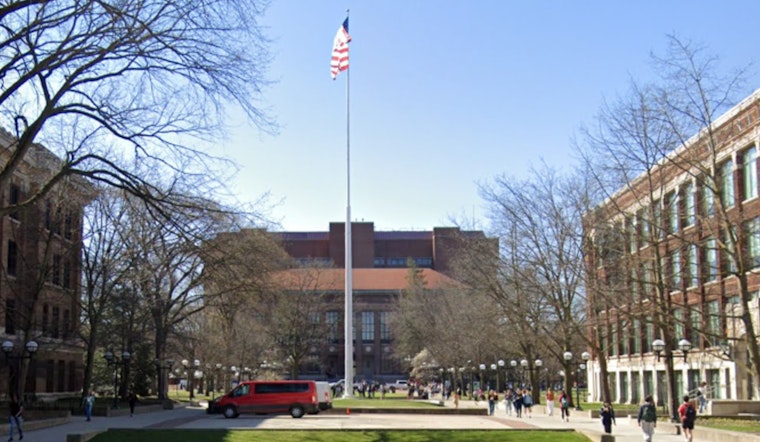
The University of Michigan, currently under a federal microscope, is among 60 higher education institutions facing the U.S. Department of Education's scrutiny over allegations of antisemitism and harassment. In a move indicating potential enforcement actions, the Department's Office for Civil Rights sent out warning letters as part of President Trump's executive order focused on investigating claims of antisemitism on college campuses, as reported by wilx. Secretary of Education Linda McMahon expressed "deeply disappointed" in a written statement, urging university leaders to step up their efforts to safeguard Jewish students who continue to feel unsafe due to persistent antisemitic incidents, as sourced from CBS News Detroit.
The communications bear the weight of government expectation, asserting that adherence to federal antidiscrimination laws is a non-negotiable requirement, tied to the public funding universities receive, McMahon's disappointment underscored by a taxing year filled with reported incidents that have seemingly gone unaddressed by these institutions, the University of Michigan being the sole school from Michigan to receive such a notice, according to a letter obtained by mlive. A university spokesperson confirmed receipt of the letter and promised a detailed review, reiterating Michigan's dedication to a safe, non-discriminatory environment for its community.
However, the broader implications of this administrative action have sparked heated commentary; Orven Mallari, a graduate student at Michigan, argued that the government’s move could worsen campus dynamics, while CAIR-Michigan Executive Director Dawud Walid warned that equating pro-Palestine viewpoints with antisemitism might infringe upon First Amendment rights, these perspectives presented by CBS News Detroit. Amidst these concerns, Michigan has shown willingness to adapt; as reported by mlive, UM Regent Sarah Hubbard mentioned policy changes aimed at ensuring student safety while preserving freedom of speech.
Reflecting on the broader scale of the department's actions, former federal prosecutor Richard Convertino raised the possibility of the Supreme Court getting involved, debating the balance of free speech and protest in academic settings, a complex discourse that the recent events have potentially, set to unravel, his comments captured by CBS News Detroit. Taking steps to enforce existing rules, UM has begun to address problematic behaviors and the Board of Regents has outlined a commitment to neutrality on political issues beyond the University's operations with an eye to maintaining an environment conducive to learning, though the full impact of the federal warning and subsequent policy shifts will unfold in time.
In the backdrop of these warnings lies the fiscal reality for the University of Michigan: $1.17 billion in federally sponsored research expenditures form a considerable chunk of their research volume, highlighting the financial implications should the university fail to address the federal concerns sufficiently. The message, stark and clear, signals that all 60 institutions, not just Michigan, are under a watchful eye, with the Trump administration clear on its stance: Fail to combat antisemitism, and federal funding hangs in the balance, this according to mlive.





