

























































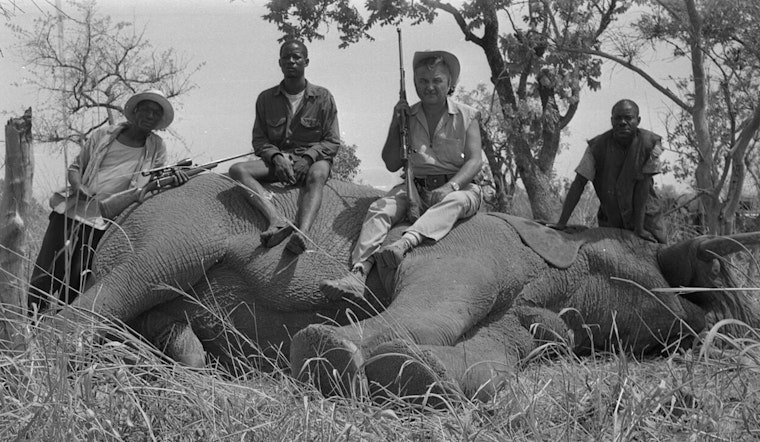
Gathering over three decades of data, a recently published article in Nature Sustainability reveals significant insights into hunting practices in the African tropical forests of Cameroon. This comprehensive study, co-authored by University of Tennessee's Adam Willcox, draws upon research stretching from 1991 to 2022 collected across 83 studies, aimed at understanding and managing hunting in order to preserve wildlife populations in the region.
Willcox's contribution traces back to his days in the Peace Corps from 1996 to 2001, when promoting agroforestry in Cameroon's lowland tropical forests was his primary focus, eating wildlife with local hunters, seeking to steer them towards more sustainable practices inadvertently. "We did not have domestic alternatives for protein. We had to eat wild animals," Willcox told the UT Institute of Agriculture. His fieldwork involved shadowing 100 hunters around a wildlife sanctuary, meticulously documenting their catches and habits.
The influence of hunting on local economies and the personal subsistence of villagers is multifaceted; while it provides economic uplift and a crucial source of protein, the research published by Willcox and his team issues a stark reminder of the perils of overexploitation. As wild game becomes scarce, entire communities face the risk of food and economic insecurity, potentially leading to further land conversion for agriculture - a process that endangers wildlife habitats further still.
The hopes of Willcox hinge on the potential impact of this research. With decades between his initial hands-on collection of data and the present analysis, he has expressed a simple, yet profound aspiration: "I hope this paper makes a difference and advances the science related to the sustainable use of natural resources," he said in the interview with the UT Institute of Agriculture, while trying to balance the scales between human need and environmental preservation. The full article is accessible through open access on the Nature Sustainability website, offering a deep dive into the nuances of regional hunting patterns.
At the University of Tennessee Institute of Agriculture, there's a firm emphasis on practical, hands-on learning, and it doesn't stop at the classroom door. The School of Natural Resources – part of UTIA which also includes the Herbert College of Agriculture, UT College of Veterinary Medicine, UT AgResearch, and UT Extension – takes the science and sustainable management of natural resources into the field, providing actionable solutions that resonate well beyond the borders of Tennessee.





.jpg)