

























































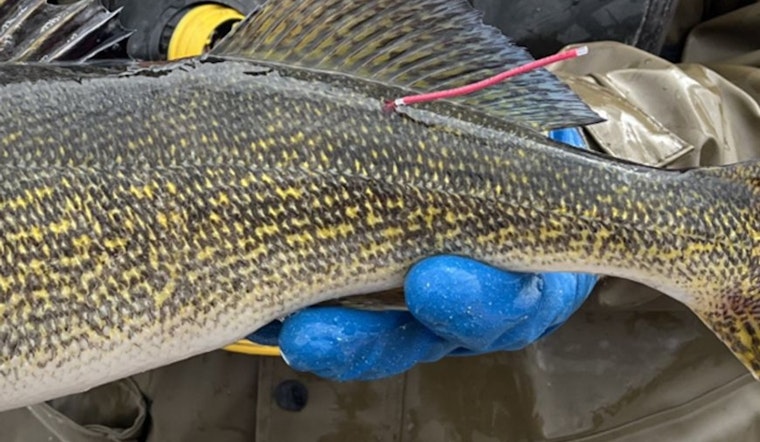
Anglers and the curious alike might find the Bay of Green Bay a little more interesting this spring as the Wisconsin Department of Natural Resources (DNR), in partnership with the non-profit group Walleyes for Tomorrow, presses on with a walleye tag study. Researchers are tagging thousands of fish to monitor the exploitation rates, which is a fancy way of saying how many of these slippery swimmers get caught and don't return home.
The Bay of Green Bay and its various waterways are home to a walleye population that beckons fishing enthusiasts both locally and from afar and it supports what could be considered a walleye wonderland; the fishery is renowned for offering up everything from your run-of-the-mill catch to the kind of prize-winning monsters that make for a proud profile picture. The DNR's initiative, which kicked off last spring and looks set to go another round, involves fastening up to 5,000 walleyes with yellow floy tags, is designed for the evaluation of the walleye fishery and calculation of the rates at which these fish are hooked and harvested annually, a detail gleaned from an official announcement by the Wisconsin DNR.
Not content with just tracking, the DNR has also spiced things up by including 400 red reward tags in the mix as they tag fish across five major spawning locations: Sturgeon Bay, and the Fox, Oconto, Peshtigo, and Menominee rivers. Each red tag carries with it a monetary incentive for anglers to report their catches, a clever ploy to encourage participation and data collection. The comprehensive survey will, ideally, amass data that could be instrumental in making informed decisions about managing the walleye population for years to come. According to the DNR announcement, “the study aims to better understand the walleye fishery and gain estimates of walleye exploitation rates.”
The study is largely funded by Walleyes for Tomorrow, which signals the group's commitment to not only today's walleye welfare but to fostering an environment where future generations can enjoy the same success and struggles with these aquatic adversaries, as Walleyes for Tomorrow have been a major contributor to the study's financial needs which is a boon for the continued research and preservation of the species this information is according to the same DNR release.





