

























































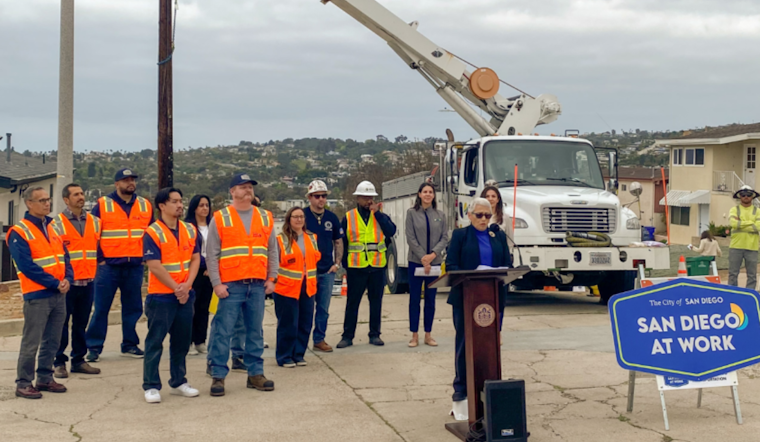
Residents of Bay Park and city officials recently celebrated a significant milestone, completing a project to improve the neighborhood's infrastructure by moving utility services underground. According to the City of San Diego, this effort saw the removal of over three miles of overhead power lines, enhancing the local environment's safety and aesthetics.
The project sign-off event, held at the intersection of Brandywine and Princeton streets, brought together community members and representatives from the City of San Diego and SDG&E. Over several months, crews worked to dismantle approximately 203 utility poles, providing 418 properties with new and reliable underground electrical, telephone, and broadband service. In addition, the city plans to repave the affected streets and introduce improvements, including 56 ADA-compliant curb ramps and 34 new streetlights.
Councilmember Jennifer Campbell, representing District 2, lauded the project's impact. "These undergrounding projects not only make our communities safer by reducing fire risks and make our neighborhoods more resilient to extreme weather events, but they also enhance our community infrastructure,” Campbell noted, per the City of San Diego. She emphasized the comprehensive neighborhood enhancements as a significant improvement to residents' quality of life.
The undertaking was part of the Utilities Undergrounding Program, a collaboration between the City of San Diego and SDG&E. The program, which underwent significant changes following a pause after the expiration of the previous Franchise Agreement in 2020, resumed in 2022 with new agreements in place. Despite the complexity involving coordination with multiple entities and possible infrastructure challenges, undergrounding utilities aims to make services more secure and reliable, said City Transportation Department Assistant Director Naomi Chavez.
Funding for these undergrounding efforts amounts to $54 million annually, sourced from a surcharge on SDG&E bills that San Diego residents have been paying since 2002. This financial strategy ensures that funds are employed exclusively to move power and communication lines below the surface and are managed according to the City Council-approved prioritization schedule.



