

























































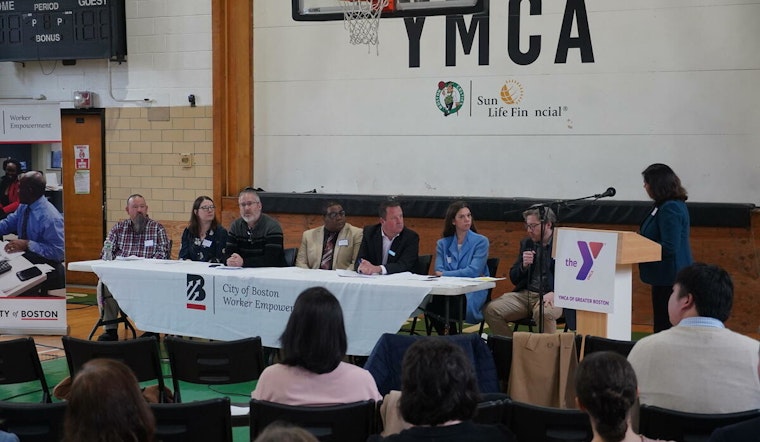
Boston's Mayor Michelle Wu, alongside Congresswoman Ayanna Pressley and the Office of Workforce Development, recently unveiled a new $1 million investment aimed to boost the city’s Digital Literacy Initiative. The DigLit Initiative is focused on embedding digital skills into workforce development programs, tackling the digital literacy gap that threatens to widen in our rapidly evolving job market. According to an announcement by the City of Boston, the announcement was made on March 20, 2025, marking a significant step towards empowering Boston's workforce with the necessary digital acumen.
During a panel discussion, which was part of the initiative's launch event, industry leaders made it clear: the demand for digital skills is set to steadily climb, cutting across various sectors, including those not traditionally associated with tech savviness. As detailed in the panel, workers are increasingly expected to navigate digital work orders, communicate via email and video platforms, and, according to a statement obtained by the City of Boston, Dana-Farber's Zachary Thompson pointed out, technicians are beginning to "use building management software to monitor mechanical, electrical, and plumbing systems and identify potential issues." This mirrors the broader trend where even the blue-collar jobs are beginning to require a considerable level of digital proficiency.
Building digital resilience was another key theme that emerged from the panel discussion as a vital component for employee success in the ever-changing technological landscape. Participants echoed the sentiment that employees now must regularly adapt not only to new roles but also swiftly transition across varied digital platforms. Creating a comfort level with technology, hence, has become more crucial than ever.
Aligning the training programs with employer needs was emphasized as a critical step in bridging the skill gap. In a partnership highlighted by the City of Boston, Macy Reed of Boston Medical Center and Rob Lowell from the YMCA of Greater Boston discussed the importance of incorporating digital literacy into the YMCA's programs. Reed stated, "a recent successful partnership between BMC required agility in planning and implementation," identifying that a shared understanding of technical and soft skills between employers and trainers is key to launching effective workforce initiatives.
The panel further recommended expanding "learn & earn" programs, relaxing education requirements to favor non-BA career paths, and pushing for digital equity, particularly for groups such as older immigrants. These insights reflect a broader shift in prioritizing foundational digital skills training, aimed at creating an inclusive environment where all community members have the chance to flourish in the digital economy. As technology continues to redefine the workplace, Boston's DigLit Initiative represents a proactive measure ensuring its residents are not left behind in the pursuit of progress and employment stability.





