

























































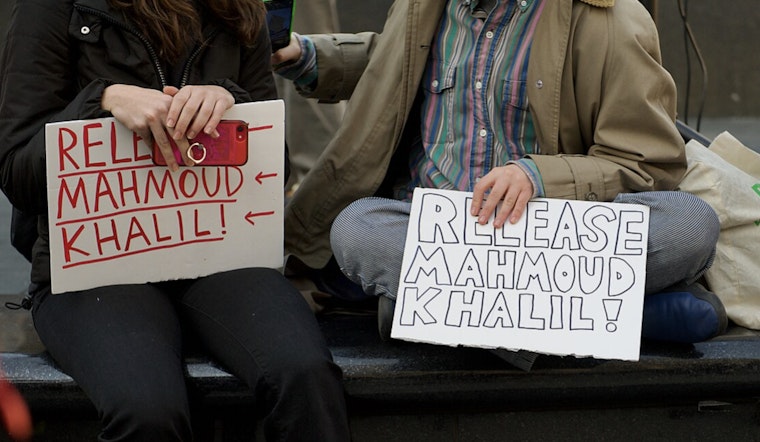
While Mahmoud Khalil remains in an ICE detention center in Louisiana, his wife, Dr. Noor Abdalla, gave birth to their son in New York on Monday. Despite requests for Khalil's temporary release to be present at the birth, ICE denied the appeal, and Abdalla experienced the event without her husband.
Khalil, a Columbia University graduate student and an outspoken Palestinian activist, was arrested at his Columbia-owned apartment on March 8. ICE transferred him first to New Jersey and then to Louisiana, far from his family. According to a statement obtained by CBS News, Abdalla described the emotional challenges of the situation, "Despite our request for ICE to allow Mahmoud to attend the birth, they denied his temporary release to meet our son. This was a purposeful decision by ICE to make me, Mahmoud, and our son suffer."
Last month, a judge in Louisiana ruled in favor of the federal government’s efforts to deport Khalil, increasing pressure on the 30-year-old's legal team. The actions leading to this decision are linked to Khalil's outspoken protests against the war in Gaza at Columbia's campus. Additionally, the Trump administration has accused him of failing to disclose certain information on his green card application. A judge has set a deadline of tomorrow for his legal team to submit applications for relief to prevent his imminent deportation, as mentioned in court documents cited by CBS News.
While the future for Khalil and his family remains uncertain, Abdalla's position is clear. "I will continue to fight every day for Mahmoud to come home to us," she said, in a sentiment reflected by the New York Post. Abdalla's advocacy for her husband has remained steadfast, "ICE and the Trump administration have stolen these precious moments from our family in an attempt to silence Mahmoud’s support for Palestinian freedom," she asserts, determined to ensure that Mahmoud's advocacy remains strong despite their personal challenges.
The broader implications of this case extend to other international students and activists. Khalil was among the first in a series of Palestinian advocacy leaders who were detained by ICE, a situation also reflected in the case of a Tufts University doctoral student. These events highlight the complex relationship between immigration enforcement and student activism in the U.S., with personal consequences for families like Khalil's and Abdalla's, as reported by the New York Post. As Khalil and his defense team continue through the judicial process in hopes of reuniting their family, his case represents a point of intersection between immigration policy and free speech.





