

























































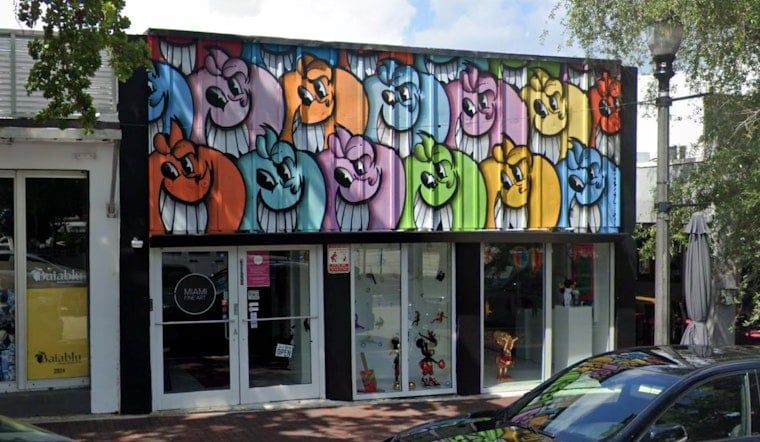
FBI agents descended upon the Miami Fine Art Gallery in Coconut Grove, an action confirmed by the Bureau as "court-authorized activity." The gallery, adorned with vibrant, grinning oranges and nestled at 3180 Commodore Plaza, became the center of an investigation whose purpose remains publicly unconfirmed, according to Local10.
Les Roberts, the gallery’s owner with a past marked by a guilty plea for mail fraud in 2015, found himself at the heart of this federal scrutiny, his history with forged artworks shadowing the present inquiry, as the tents of federal officers set against the art-laden backdrop visually articulated an unsettling juxtaposition, while authorities removed pieces of artwork, aerial footage captured by Chopper 6 depicted as reported by NBC Miami.
With Roberts's integrity in question, stemming from allegations that notorious Andy Warhol paintings sold were counterfeit—a claim which Roberts has flatly denied—his legal tribulations compound; the allegations come on the heels of reporting by the New York Times and the Coconut Grove Spotlight covering ongoing lawsuits against Roberts and Miami Fine Art, as Local10 notes.
The community's response is one of both concern and a steadfast commitment to due process, as Nayib Ramirez, proprietor of nearby Loretta and the Butcher, reflects he's aloof from the gallery owner, expressed his hope that this situation resolves lawfully, stating, "What we hope to do, and what of the businesses I hope also do it, is do everything by the law, Do everything by the book," according to an interview with NBC Miami. As the investigation unfolds, the art community, the local businesses, and the watching world find themselves grappling with the uneasy intersection where commerce, creativity, and criminality may collude.
Further complaints against Roberts allege that clients either never received their paid-for works or were also victims of fraud, with one client claiming to be owed over $447,000 after receiving only three of more than thirty artworks, later identified as forgeries—a deception costlier than the price of canvas and paint, cutting deep into the trust that sustains the fragile economy of artistry and authenticity.





