

























































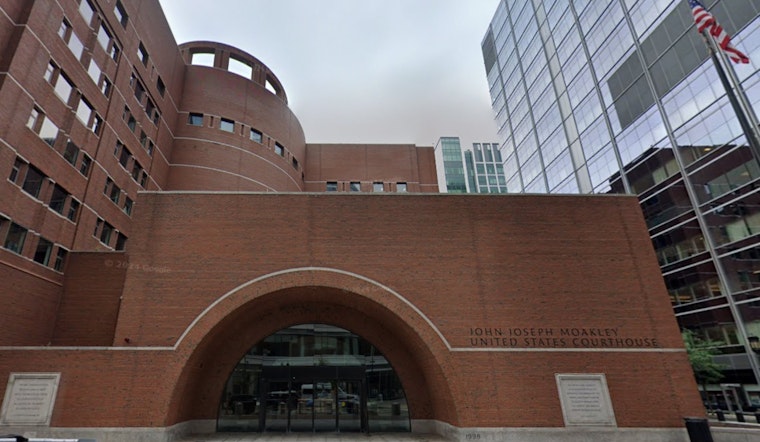
A Hadley resident with a previous conviction history was apprehended and now faces charges for the unlawful possession of firearms and ammunition. Forty-three-year-old Jacob D. Miller was taken into custody and appeared before U.S. Magistrate Judge Katherine A. Robertson in Springfield's federal court, according to the U.S. Attorney’s Office. Released on conditions, Miller must now navigate the judicial process once more.
Historically, Miller's interactions with the law have been serious. Convicted on February 9, 2004, for possession of child pornography and possession of explosive devices in separate cases, he received sentences that included jail time and probation. Recently, a search conducted on Tuesday unearthed a box containing roughly 50 rounds of .45 caliber ammunition and six firearms in a safe, as indicated in the charging documents. Located at his bedside, the presence of these items is to be seen as nothing short of a breach given his standing decree.
The potential dangers linked to Miller's stored materials prompted the Massachusetts Department of Environmental Protection (MassDEP) to express significant safety concerns. With the possible hazards at Miller's residence, including "accidental release, breaking of containers, mixing of incompatible or reactive chemicals and or a fire," the MassDEP has pressed for a thorough evaluation and cleanup. In response to these apprehensions, one of the conditions for Miller's release is his agreement to a comprehensive assessment and removal of any hazardous substances by the MassDEP, as stated by the U.S. Attorney’s Office.
If convicted, Miller could face a sentence of up to 15 years in prison, three years of supervised release, and fines amounting to $250,000. U.S. Attorney Leah B. Foley and Jodi Cohen, the Special Agent in Charge of the Federal Bureau of Investigation's Boston Division, made this announcement, lending transparent insight into the committed collaboration with local law enforcement on the case. Assistant U.S. Attorney Steven H. Breslow of Springfield's Branch Office is moving the prosecution forward. The defendant's guilt can only be ascertained post-verdict, as the presumption of innocence remains until proven otherwise beyond a reasonable doubt.





