

























































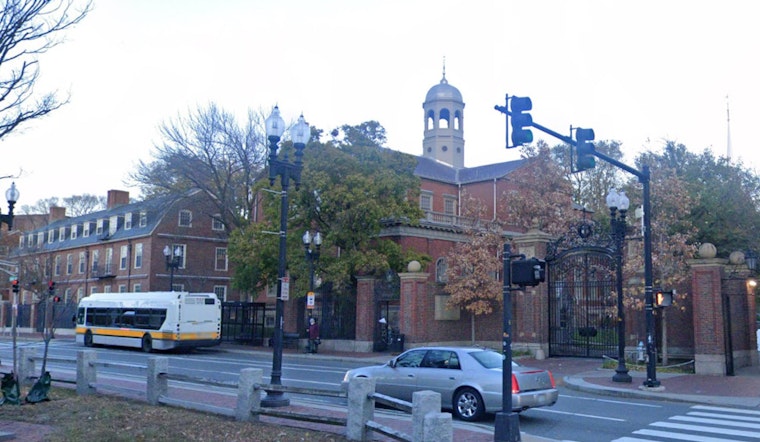
Harvard University has issued a formal apology amidst revelations of antisemitism and Islamophobia on its campus. These findings have emerged from comprehensive reports, spanning over 500 pages, detailing the university's inadequate response to both issues, as reported by CBS News Boston. The reports, requested by the Department of Health and Human Services, painted a picture of students feeling marginalized, with Jewish students feeling unsafe and Muslim students experiencing threats and doxing.
In his letter of apology, as mentioned by The Boston Globe, Harvard's President Alan Garber offered his regret for the university's shortcomings, stating, "I am sorry for the moments when we failed to meet the high expectations we rightfully set for our community." Harvard interim-President Alan Garber, according to CBS News Boston, highlighted that this report reflects events starting on October 7, 2023, through the encampments in Harvard Yard.
Both Jewish and Muslim students have reported severe instances of bias and discrimination while at Harvard. Jewish students described being pushed to the periphery of the campus community, feeling like outsiders due to their heritage and political convictions. In a statement obtained by The Boston Globe, one Jewish student's attempt to share their family's history was met with censorship, with the student's narrative being deemed as not "tasteful" for not acknowledging Palestinian displacements.
Meanwhile, Arab and Muslim students relayed their experiences of being treated as "second-class citizens," and one student told The Boston Globe about being bullied for merely wearing a keffiyeh. Within the complexity of these experiences, the reports revealed deep-seated animosity, including incidents in which Jewish and Israeli students faced a hidden expectation to distance themselves from Israel to avoid being labeled as oppressors. At the same time, Arab and Muslim students were disparaged as terrorists, some seeking to hide the outward signs of their identity to avoid conflict.
In response to the findings, Harvard has taken steps such as revising its code of conduct to explicitly prohibit doxing and implement faculty and student training on antisemitism. As The Boston Globe reports, the university has also pledged to launch a research project on antisemitism and a historical analysis of Muslims, Arabs, and Palestinians at Harvard. Additionally, the administration is reviewing recommendations to expand academic offerings on antisemitism and Jewish history and to protect students from harassment stemming from their political beliefs.
Putting a spotlight on controversial topics such as divestment from Israel, the reports compared student sentiments towards Harvard's current stance with its historical decision to cut ties with South Africa's apartheid government, as described by The Boston Globe.





