

























































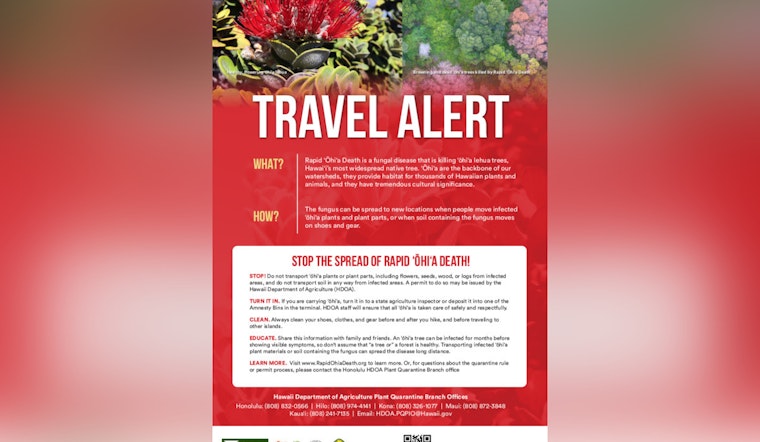
As the Merrie Monarch Festival prepares to enchant with its celebration of hula and Hawaiian culture from April 20 to 26, the Hawai‘i Department of Agriculture (HDOA) is sending out a reminder to attendees. The ongoing quarantine restrictions on the transport of ʻōhiʻa plants from Hawai‘i Island are still rigidly in place amidst concerns over the rapid ʻōhiʻa death (ROD) that's been wreaking havoc across native forests. The restrictions have been enforced since 2015, aimed to prevent the disease's spread, as documented in a recent report by HDOA.
The combat against ROD continues to be a high-stakes endeavor requiring stringent measures. Travelers can't help but to be reminded that the transportation of various ʻōhiʻa components – which includes seeds, leaves, wood, and even soil – off of Hawaiʻi Island is a regulated affair, necessitating permits for legal movement. According to the same HDOA report, HDOA’s Plant Quarantine Branch (PQB) will enforce these restrictions with inspectors on-ground at airports in Hilo and Kona come April 27 and 28 to ensure compliance and the respectful return of any ʻōhiʻa material to its native settings.
Last year’s festival saw Hilo PQB inspectors intercept 27 lei poʻo (head lei), an example of the vigilance necessary to maintain the integrity of Hawaii’s ecosystems. Furthermore, the University of Hawai‘i at Mānoa, College of Tropical Agriculture and Human Resilience has collaborated in the endeavor by providing hoʻihoʻi baskets for the collection of any ʻōhiʻa at both the festival and airports, reinforcing the community's role in this environmental protection effort.
The regulations around the ʻōhiʻa quarantine are quite clear: noncompliance could lead to a misdemeanor charge with fines ranging significantly, from $100 up to $10,000, and steeper penalties for repeat offenses. This info comes straight from the HDOA's announcement itself. The Merrie Monarch Festival, while a hub for cultural celebration, also becomes a point of vulnerability for the spread of ROD, as the act of harvesting ʻōhiʻa may inadvertently disseminate the disease.
Researchers first detected ROD in 2010, and since then, at least one million ʻōhiʻa trees have fallen victim to the blight on Hawai‘i Island alone. Despite eradication efforts, including one infected tree on Maui that was quickly handled, the disease's origin and points of entry into the state remain a mystery. For those seeking more information or inspection advice, contact details for HDOA’s Plant Quarantine offices are readily available with numbers listed for Hilo, Honolulu, Kona, Maui, and Kauaʻi on the HDOA website, and additional resources about ROD can be found at the University of Hawai‘i at Mānoa's College of Tropical Agriculture and Human Resources website.


