

























































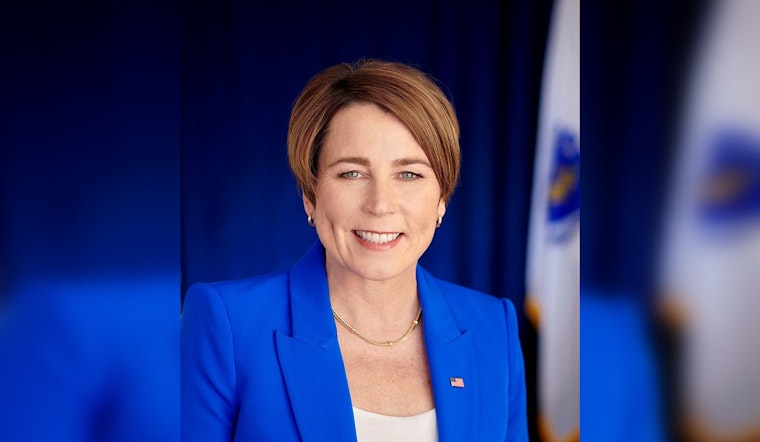
In a recent roundtable discussion spearheaded by Governor Maura Healey, Massachusetts's key players from the business sector huddled to take on the brewing storm of President Trump's tariffs. According to a report from Mass.gov, the discourse tabled the harsh reality of tariffs that are seen as a gamble with the state's economic stability and, beyond individual enterprises, the day-to-day lives of its citizens. Leaders from various industries, alongside Lieutenant Governor Kim Driscoll and Economic Development Secretary Yvonne Hao, gathered in solidarity in hopes to chart a course through the treacherous waters of market uncertainty.
President Trump's recently announced tariffs have already begun to ripple through the economy, even ahead of their full implementation. In a twist of fate, President Trump hit the pause button on most of these tariffs for a forthcoming 90 days. Despite the temporary reprieve, the shadow of impending tariffs looms large. "President Trump needs to stop holding our economy hostage and gambling with people’s livelihoods," Governor Healey said in a statement obtained by Mass.gov. The sentiment echoes throughout the state's economy, signaling a hunger for stability in a climate none can afford.
Business leaders did not mince words when expressing their position on the matter. With the Commonwealth fronting $77 billion in exports and supporting one in five jobs, the consensus is clear—the tariffs threaten to ratchet up prices on everything from the cars we drive to the food we eat. JD Chesloff, President & CEO of the Massachusetts Business Roundtable, told Mass.gov that the "uncertainty and disruption" are leading to reevaluations of investment, hiring, and, fundamentally, the strategies for long-term success.
Amidst this fiscal turbulence, there is a shared acknowledgment that manufacturing sustains a significant sector of the Massachusetts economy, as noted by Ben Linville-Engler, Deputy Director and Chief Investment Strategist at MassTech. Nicole Obi, President & CEO of the Black Economic Council of Massachusetts, highlighted the specific threats these tariffs pose to Black and Brown businesses. "I'm grateful that the Healey-Driscoll Administration convened us here today and I'm optimistic that the Commonwealth can find ways to band together to help blunt the impacts of these Federal tariff policies," Obi conveyed in remarks reported by Mass.gov.
While each sector's story varies, the theme remains constant: tariffs erupt uncertainty and invite elevated costs. James E. Rooney, President & CEO of the Greater Boston Chamber of Commerce, acknowledged the "profound impacts" in his statement to Mass.gov. Rooney's acknowledgment of the ongoing partnership with the state as crucial to navigating these troubled times. As the 90-day hold on tariffs provides a momentary breath, these business leaders and state officials express a unified resolve to solidify Massachusetts’s footing in an ever-shifting economic landscape.





