

























































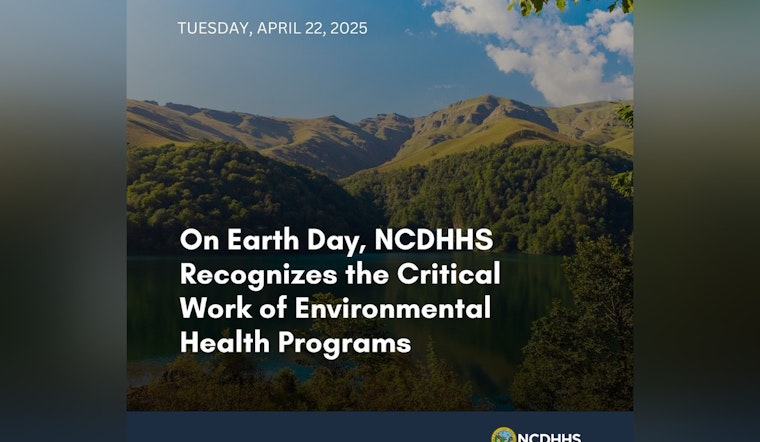
On the occasion of Earth Day, the North Carolina Department of Health and Human Services (NCDHHS) took a moment to underscore the significance of environmental health in safeguarding the welfare of North Carolinians. In a release published by the NCDHHS, NC Health and Human Services Secretary Dev Sangvai emphasized, "Our environmental health and epidemiology teams work every day to protect families from unseen dangers such as contaminated water, excessive heat, foodborne illness and heavy metals in soil."
Environmental health initiatives are of particular importance in North Carolina where, reportedly, 25% of its population depend on private wells that may be susceptible to contaminants including arsenic and bacteria. The NCDHHS offers a Private Well and Health program designed to aid families in interpreting water test results and navigating treatment options. Furthermore, they are in process of developing a tool aimed at mapping areas of increased concern for well contamination. The department's commitment to such programs has been an ongoing effort, and the state itself has felt the physical consequences of failing federal support, faced with staffing reductions at essential agencies like the Centers for Disease Control and Prevention and the U.S. Environmental Protection Agency.
Highlighting the criticality of these federal fund-supported programs, Dr. Kelly Kimple, Interim State Health Director and NCDHHS Chief Medical Officer, said, "These programs often operate quietly in the background—but they're essential to everyday health and safety." Programs facing jeopardy include emergency response systems for heat-related illnesses, which on record, tracked 4,688 emergency department visits in 2024 and necessitated the issuance of more than 1,200 local extreme heat alerts. Aside from heat alerts, other essential services such as childhood lead exposure prevention and the outbreak response for foodborne illnesses are also at risk, as per the NCDHHS reports.
Another tool at risk is the Environmental Health Data Dashboard, which provides user-friendly access to 120 environmental and health indicators. This tool, among others, serves as educational platforms and testing resources that assist in protecting the state's populace from the impacts of pesticide exposure and industrial pollution. Outreach and education programs even stretch to occupational health monitoring, addressing hazards from carbon monoxide and lead exposure. Nevertheless, as North Carolina grapples with escalating environmental threats, from hurricanes to heatwaves, such programs are not merely conveniences but necessities. Kimple punctuated this reality stating, "NCDHHS remains committed to protecting our communities, but continued investment is vital. As North Carolina faces increasing environmental threats from hurricanes to heatwaves, we can't afford to lose these safeguards," as reported by the NCDHHS.




