

























































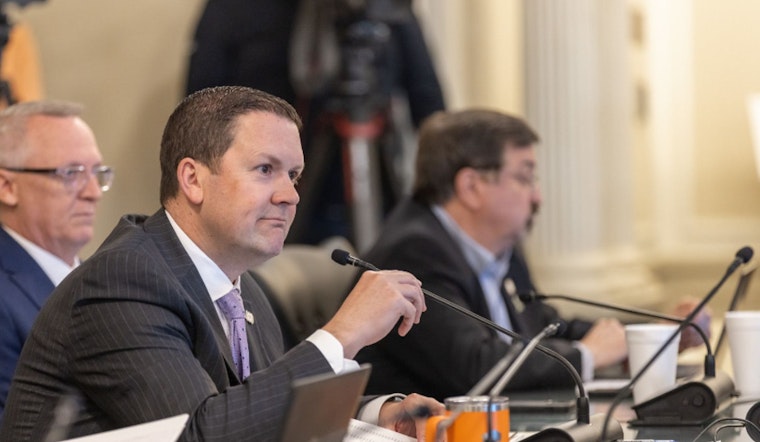
Oklahoma students might soon find themselves hitting the books harder in math and reading, and spending more days in the traditional classroom setting, as the House Appropriations & Budget Education Subcommittee gave the nod to three educational pieces of legislature on Monday. Championed by House Speaker Pro Tempore Anthony Moore, R-Clinton, these bills are laser-focused on improving literacy and computational skills among the young minds of Oklahoma, according to a statement on the Oklahoma House of Representatives website.
Touching first on the numbers game, the proposed Oklahoma Math Achievement and Proficiency Act under Senate Bill 215 seeks to administer tri-annual math proficiency screenings for students in second through fifth grades, acting as early indicators for excellence or the need for intervention; whereas those who excel would be granted access to more advanced learning opportunities, those falling behind would find themselves receiving individualized support subsequent to their parents being notified, as articulated in Senate Bill 215. Moore, whose mother's 33-year tenure as a math educator undoubtedly informed his stance, highlighted the imperative for a salient comprehension of math leading into eighth grade as a pinnacle of higher education and future employability, pointing out the dishearteningly static nature of the state's National Assessment of Educational Progress (NAEP) scores, and acknowledging a buffer period for students yet recovering from the academic displacement sown by the pandemic.
Moving to the literary realm, Senate Bill 840 advocates for the creation of a micro-credential for certified teachers aiming to become dyslexia specialists, a move Moore believes will not only aid in the initial detection of dyslexia among students but will also elevate literacy rates across the board by ensuring the provision of necessary interventions and support. "These are more than just curriculum, they help students the rest of their lives, including in their future careers," Moore emphasized about the significance of reading and its lifelong impact, as per the Oklahoma House of Representatives statement.
Moore’s third education reform focuses on how instructional time is structured. Senate Bill 758 would limit schools to counting only two virtual days—or 12 hours total—toward their required instruction time, and only under specific conditions: a governor-declared emergency, approval by the school board, and a virtual instruction plan approved by the state superintendent. Moore says the goal is to prevent the overuse of virtual days, which he argues often leave students without meaningful instruction. However, school districts would still be allowed to use four-day school weeks, and the limits would not apply to statewide virtual charter schools or full-time virtual programs run by districts.
The trio of bills, having cleared the subcommittee, now stand poised for deliberation before the full House Appropriations & Budget Committee, where they will undergo further scrutiny before potentially transmuting policy dreams into the educational reality of tomorrow's Oklahoma.





