

























































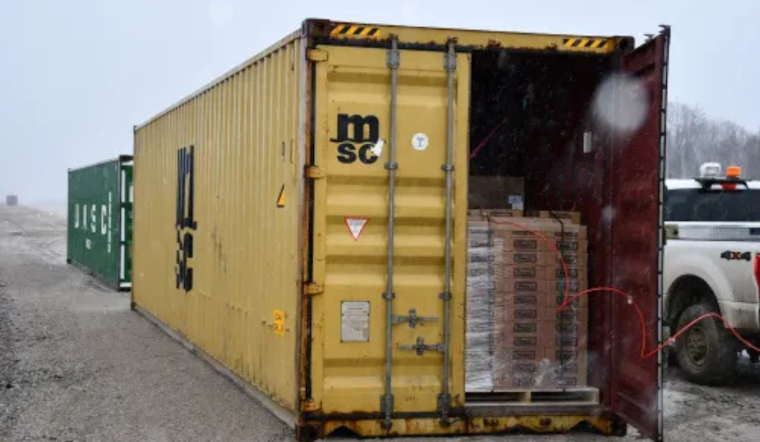
Port Huron's vigilance on invasive species had a moment of truth on March 17 when U.S. Customs and Border Protection (CBP) agriculture specialists intercepted a live Asian Long Horned beetle, an invasive pest known to wreak havoc on hardwood trees. Found during a cargo inspection coming in from Romania, the unwelcome visitor and accompanying larvae were nesting amidst wood pallets that were supposed to be safely treated to prevent such issues. The detection marked the first time since November 2021 that the beetle had been spotted in the area—over three years.
The discovery brought to light the critical role of Customs and Border Protection's agricultural specialists, "Our nation's agriculture industry is constantly at risk from pests and disease not known to occur in the U.S.," said Area Port Director Jeffrey Wilson, and with potentially more robust insect activity indicated by the presence of frass, this interception was key in protecting local ecosystems. Wilson’s appreciation for his team's efforts was clear, notably when he commented, "This interception by our highly skilled agriculture specialists showcase our continued commitment to safeguarding American agriculture and protecting public health." The species poses a major threat as they can severely damage and often kill trees like maples, which are economically and ecologically important.
According to Customs and Border Protection, the issue of invasive species is not isolated to this particular beetle or area; it's a nationwide concern affecting forests and urban landscapes. Marty Raybon, Director of Field Operations, emphasized, "The Asian Long Horned Beetle is a destructive invasive species that threatens our forests and urban landscapes." He added, "Every successful interception, like this one, prevents potential devastation to our hardwood trees and reinforces our commitment to keeping invasive pests from harming our environment and economy."





