

























































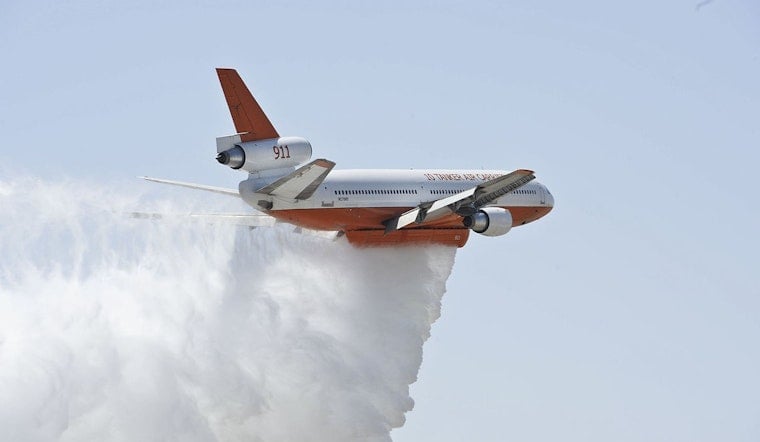
The U.S. Senate has passed the Aerial Firefighting Enhancement Act of 2025, a significant measure aiming directly to bolster the capabilities of wildfire suppression from the skies. Senators from both sides of the aisle, including Mark Kelly (D-AZ), Martin Heinrich (D-NM), Tim Sheehy (R-MT), and Alex Padilla (D-CA), have put partisan divisions aside to support the legislation that seeks to answer the escalating threat of wildfires that have wreaked havoc across the American West. The bill now looks to the House for approval, a mere step away from becoming law.
"In Arizona and across the West, wildfires are more frequent, more intense, and no longer confined to a single season. Our response capabilities need to reflect that new reality," said Kelly in a statement. The bill promises to strengthen aerial firefighting by expanding the availability of aircraft and parts, an approach Kelly firmly believes will help "respond faster and keep communities safe." With early-season fires already proving themselves costly and dangerous, the urgency to adapt and enhance firefighting tools is palpable.
Spearheaded by Senators deeply familiar with the impacts of wildfires in their respective states, the act has received applause for its intention to streamline the amendment of the Wildfire Suppression Aircraft Transfer Act of 1996. This revision looks to reauthorize the sale of excess aircraft and parts by the Department of Defense for wildfire suppression. "I will never stop fighting to deliver the resources that our communities need to effectively respond to wildfires," Heinrich told the press, underscoring the bill’s importance.
As catastrophic wildfires continue to burden communities, the act’s intention to be proactive rather than reactive has been highlighted as a necessary shift in strategy. Padilla pointed out the effectiveness of aerial suppression during the Los Angeles fires and called the Senate's unanimous backing of the bill a "lifesaving, commonsense priority." According to the bill's stipulations, the Secretary of Defense is to be reauthorized to sell, at fair market value, excess aircraft and parts to entities contracting with the government to deliver firefighting services from the air. This reauthorization comes after the authority expired previously in 2005 and again lapsed after a brief reinstatement from 2012 to 2017.
The shared ambition of a more robust and ever-ready aerial firefighting squadron, equipped to counter the ever-intensifying wildfires, reflects a bipartisan recognition of a climate dilemma without respect for man-made political boundaries. The Aerial Firefighting Enhancement Act of 2025 is not merely a piece of legislation; it is a commitment to protect both the natural landscapes and the human settlements that find themselves in this new and fiery epoch. The House now stands in a position to further this commitment, with wide-reaching implications for the future of wildfire management.



