

























































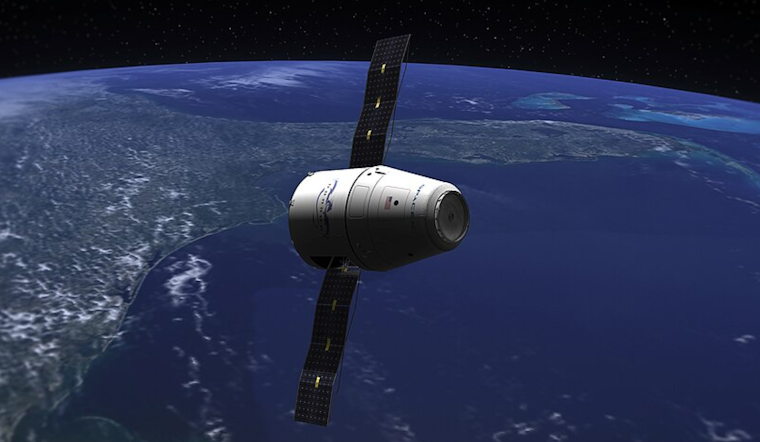
Today, Southern California witnessed the successful return of SpaceX's Dragon spacecraft, which had been orbiting Earth's poles on a historic journey with four space tourists. It became known with a sonic boom heard across the coastal North Count. The crew safely buckled inside the Dragon capsule and experienced the culmination of their near four-day voyage as it descended into the Pacific Ocean off the coast of Oceanside at 9:19 a.m., in the first Pacific splashdown of its kind in fifty years, marking a significant moment for SpaceX and its ambitions in space tourism, as reported by FOX 5 San Diego.
The Fram2 crew consisted of Bitcoin investor Chun Wang, Norwegian filmmaker Jannicke Mikkelsen, German robotics researcher Rabea Rogge, and Australian polar guide Eric Philips, each selected by Wang for this privately funded polar orbit tour, as 10News documented. During their time in space, they not only enjoyed unparalleled views of the earth below through a special domed window but also conducted experiments, including the first medical X-rays taken in space and their space motion sickness, which subsided by day two allowing them to observe the poles fully, they named their trip Fram2 after a historic Norwegian ship that explored the poles over a century ago took a part of the ship's wooden deck along with them.
The recovery of the spacecraft was handled by SpaceX's specialist teams aboard the vessel Shannon, ensuring the safe retrieval of the crew and capsule shortly after the controlled splashdown. Wang and his companions emerged from the Dragon on their own, providing researchers with immediate insight into their post-flight steadiness while also being jubilant as they exited the capsule.
According to FOX 5 San Diego, the choice to land in the Pacific instead of the more conventional Atlantic splashdowns was driven by safety concerns, mainly to ensure that remnants of the spacecraft's trunk, which are shed before reentry, do not pose a threat upon reentering but rather are safely deposited in the ocean far from populated areas; this switch represents a strategic step by SpaceX to enhance the overall safety of its operations.





.jpg)