

























































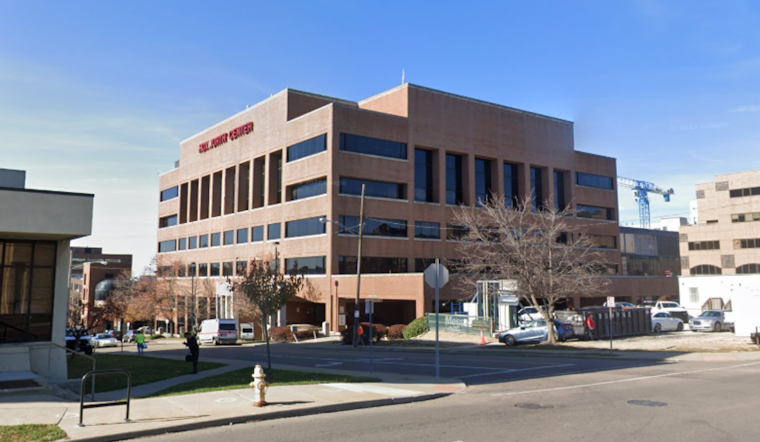
When the shadow of cancer looms over family history, the advice often circles back to seeking professional guidance. In a recent New York Times article, the University of Cincinnati Cancer Center's own Syed Ahmad echoed this recommendation. Ahmad emphasized that checking for gene changes through a specialist might be on the table if your doctor sees it fit.
Many shy away from this path, and Ahmad gets why. "A lot of times, patients are scared to go to a genetic counselor" due to "fear of the unknown," he told the New York Times via the University of Cincinnati website. Fear, after all, is a potent deterrent. But knowing doesn't equate to a cancer sentence. Not all genetic variants willingly dance to cancer's tune. Notably, Ahmad, who serves as the interim director of the Cancer Center and dons several prestigious academic hats at UC's College of Medicine, pointedly mentioned genes such as BRCA1 and BRCA2, hinting at breast cancer's trail in some families, while not forgetting to mention Lynch syndrome for those with a history of colon cancer among kin.
These aren't arbitrary mentions. Lynch syndrome, a hereditary specter, can drastically up the ante for colon cancer risk – figures skyrocket up to 80% for men and 60% for women. The numbers, obtained by the University of Cincinnati, magnify the imperative to seek informed medical counsel.
The process might appear daunting, especially considering the stakes. However, Ahmad's advice appears to not only acknowledge the trepidation that patients might feel but also gently encourage them to potentially save their own lives. With the right knowledge and preventative measures, those genetically predisposed to cancer might be able to evade an almost seemingly destined fate.



