

























































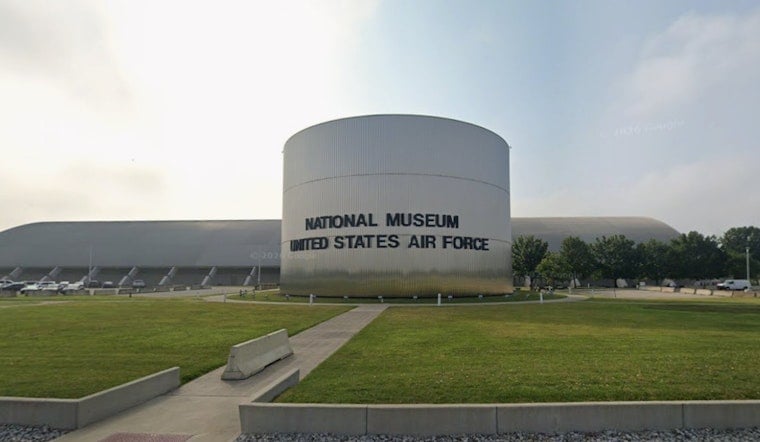
A drone weighing barely 31 pounds hauled 220 pounds of cast-iron weight plates across the grounds of Wright-Patterson Air Force Base this week, part of a four-day competition pitting nearly 70 teams against a problem that has stumped aviation engineers for decades: how to get a small aircraft to lift far more than its own weight. The DARPA Lift Challenge, held for the first time at the National Museum of the U.S. Air Force in Riverside, runs through Sunday, Aug. 9, from 8:30 a.m. to 8:30 p.m.
The contest requires drones to fly five nautical miles over a course with demanding maneuvers, according to the Springfield News-Sun, and DARPA is pushing teams to lift up to four times their own aircraft weight. That target sits far beyond the norm: commercial multirotor drones generally top out at payload-to-weight ratios of 1:1 or less, and even specialized manned heavy-lift cargo helicopters rarely do much better, according to Military Times. Under DARPA's own qualifying rules, competing aircraft must weigh no more than 55 pounds including fuel or batteries while proving they can carry a minimum payload of 110 pounds over the course, per DARPA.
A 30.8-Pound Drone Hauls 220 Pounds
Among the standout entries is a drone nicknamed Dreamcatcher, which weighs 30.8 pounds and carries a 43-inch propeller, according to the Springfield News-Sun. Carlos Gutierrez, who represents drone propulsion manufacturer Hobbywing North America and brought the aircraft to the challenge, said his team would push the drone to its limits and told the paper it carries his team's dreams. Gutierrez had hoped Dreamcatcher would lift well over 100 kilograms, and on its last flight the drone lifted 220 pounds, the Springfield News-Sun reports.
Gutierrez said Hobbywing North America, based in Pasadena, California, supplied the motors used by many challenge participants. Heather Dees, who works in public affairs for DARPA, said a near-four-times lift by one drone was a gamechanger, and Dees separately noted that contestants were testing the very limits of their machines.
Crashes, Rebuilds, and a Federal Flight Waiver
Not every flight went smoothly. A drone crashed in the grass off a museum runway Thursday, and the article notes that challenge contestants helped each other after crashes throughout the event. Phillip Smith, the DARPA program manager overseeing the event, said contestants came together and rebuilt after crashes, according to the same account.
Because lifting roughly 220 pounds with a 55-pound aircraft exceeds standard Federal Aviation Administration Part 107 weight limits, DARPA secured a Section 44807 FAA exemption to legally permit the heavy-payload competition flights, according to Dronelife. The full course, as detailed by Aerospace America, requires drones to fly the first four miles carrying cast-iron weight plates, release the payload at a designated landing pad, and then navigate the final mile back unloaded without any repairs between legs — a profile meant to simulate emergency deliveries into disaster zones or combat areas.
Millions in Prize Money, a Military Mission
DARPA is offering more than $6.5 million in total prize money, including $2.5 million for first place, $1.5 million for second, $1 million for third, and three $500,000 innovation awards, per Aerospace America. Those top payouts will be cut in half if no team manages to hit a 4:1 payload-to-weight ratio. Smith said a large fire department had already identified the challenge's technology as meeting its own operational needs, the Springfield News-Sun reports.
Phillip Smith, an active U.S. Marine Corps Reserve officer and former AV-8B Harrier combat pilot, oversees the Lift Challenge through DARPA's Tactical Technology Office, according to AFCEA Signal Magazine. The competition aligns directly with the Department of Defense's Drone Dominance initiative, which aims to accelerate uncrewed aerial technology and reduce cargo delivery costs per pound, Military Times reports. DARPA's own effort focuses specifically on novel, low-cost engineering designs rather than the manufacturing scalability that Drone Dominance targets.
From Garage Inventors to University Labs
Generals and civic leaders attended the DARPA Lift Challenge alongside roughly 70 competing teams, which the Springfield News-Sun's Thomas Gnau reported span startups, universities, and independent inventors. Among them was the University of Nevada, Reno's Team TITAN, which entered a 12-propeller dodecahexacopter designed for a 3.27:1 payload ratio, according to University of Nevada, Reno. International participants were allowed to join teams as long as the lead representative held U.S. citizenship or permanent residency.
DARPA had laid the groundwork years earlier, issuing a 2024 solicitation for heavy-lift uncrewed systems and commissioning feasibility research that confirmed 4:1 payload ratios were achievable with modern materials and propulsion, Aerospace America notes. Advances in 3D printing, computational fluid dynamics, and high-density electric and hybrid motors helped make that goal realistic. Hoodline previously covered a DARPA-funded albatross drone developed by University of Cincinnati researchers, part of a broader wave of federal investment in uncrewed aircraft research across the region.
A Public Show at the Air Force Museum
The DARPA Lift Challenge is co-located with Flite Fest 2026, one of the world's largest grassroots radio-controlled aviation festivals, at the National Museum of the U.S. Air Force, according to the National Museum of the U.S. Air Force. The museum, located off Springfield Street at Wright-Patterson Air Force Base Gate 28B in Riverside, is open 9 a.m. to 5 p.m. seven days a week, and the pairing has brought free public admission, RC build tents, and flight demonstrations alongside the DARPA trials.
DARPA says the challenge is seeking technology useful for both national defense and civilian uses, a dual purpose reflected in the course's disaster-relief-style flight profile. With the competition running through Sunday, teams still have several more flight legs to attempt the 4:1 threshold that would unlock DARPA's full top prize.





