

























































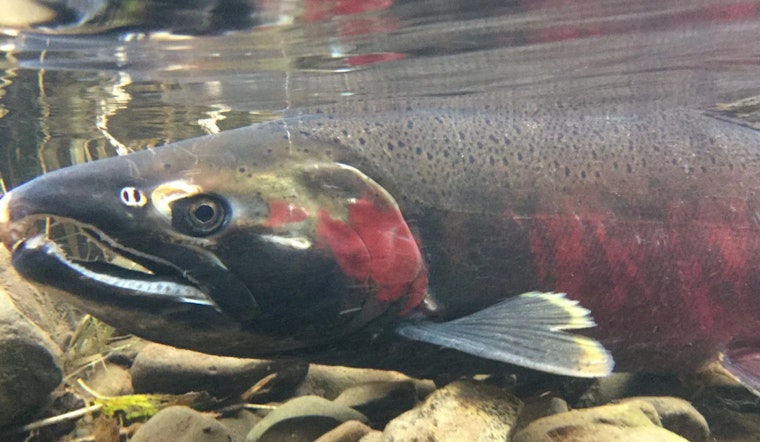
The Washington Department of Fish and Wildlife (WDFW) is opening the floor to public opinion on future plans for fishery management along the Lower Columbia River tributaries. In a notice posted on their website, WDFW highlights the significance of public contributions to shaping the potential updates to the Lower Columbia River Tributary Fishery Management and Evaluation Plan (FMEP). Voices from across communities are poised to influence a blueprint that will dictate the delicate balance between ecological preservation and recreational fishing desires, a subject which, by its nature, attracts diverse perspectives and interests.
According to the release, WDFW's Southwest Region Fish Program Manager, Bryce Glaser, proclaimed the need for individual insight, stating, "This is an opportunity for individuals to weigh in on how we approach fisheries management in Lower Columbia River tributaries." Introducing advanced scientific modeling and public sentiment into the equation, WDFW is looking to not only honor the needs of the present but to forecast and safeguard the prosperity of fish populations and fishing opportunities in the long term.
Last updated over two decades ago, the FMEP meets requirements set by the National Oceanic and Atmospheric Administration (NOAA) for maintaining fishing seasons for local salmon and steelhead populations, which are guarded under the U.S. Endangered Species Act (ESA). The Plan establishes benchmarks for fishery health, delves into conservation risks, and sets out strategies for regulation, enforcement, and the routine monitoring of fish populations. Thanks to funding from the Washington state legislature for the 2023-2025 biennium towards Columbia River ESA Permitting, WDFW is employing a Management Strategy Evaluation (MSE) method. This fresh approach leans on complex modeling to foresee the outcomes of potential management strategies.
A virtual public meeting was convened by WDFW on April 1, aimed at discussing available harvest management options and delving into the depths of the evaluation process. For those who couldn't attend or who are hungry for more information, WDFW has uploaded a recording of the meeting and provides access to presentation materials on the survey webpage. Furthermore, the WDFW blog promises a deeper dive into the mechanics of how exactly the MSE aids in refining the Tributary FMEP.
WDFW's call for input stands as an emblem of inclusivity, extending an invitation to all individuals to chip in their thoughts, ensuring that a diversity of identities and experiences are represented in the process. Responses to the survey can be submitted until April 30, veiling an open channel for public participation. Those requiring information in alternative formats or languages can reach out to the department through various accessible means, signaling WDFW's commitment to full accessibility in this participatory endeavor. At its core, WDFW's initiative seeks to stand as a steward of the region's fish, wildlife, and ecosystems, all while sustaining fishing opportunities that are vital to the cultural and economic tapestry of the region.





