

























































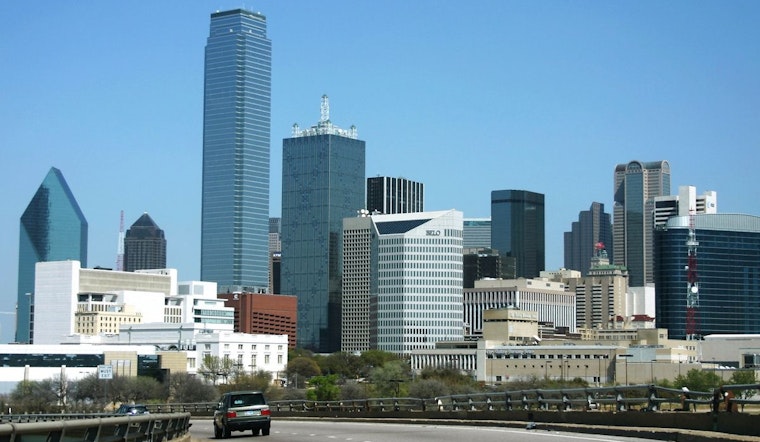
Dallas-Fort Worth residents woke to another Ozone Action Day alert on Saturday, May 31, 2025, as atmospheric conditions created the perfect storm for elevated ground-level ozone pollution across the metropolitan area. The Texas Commission on Environmental Quality (TCEQ) issued the warning at 1:54 PM CDT, cautioning that Sunday, June 1, would bring favorable conditions for producing dangerous levels of ozone air pollution.
Repeated Pattern of Air Quality Concerns
This latest alert continues a troubling pattern for the Dallas-Fort Worth region, which ranks 13th worst out of 228 metro areas for high ozone days according to the American Lung Association's latest report. Between May and September of last year, North Texas experienced 31 "exceedance days" when air quality became unhealthy for sensitive groups. The region's ozone season extends from March through November, making it one of the longest in Texas alongside Houston.
TCEQ forecasters predict that warm temperatures, light winds, and sufficient afternoon sunshine could push ozone levels into the "Unhealthy for Sensitive Groups" range, particularly in central and northern portions of the Dallas-Fort Worth area. The highest concentrations typically occur during afternoon and early evening hours when sunlight drives chemical reactions between nitrogen oxides and volatile organic compounds.
Weather Conditions Amplify Air Quality Concerns
The weekend's weather forecast compounds the ozone formation risks across the metroplex. According to TCEQ's latest forecast, Saturday's conditions featured warm to hot temperatures with light winds and sufficient afternoon sunshine - the perfect recipe for ozone accumulation. A cold front that moved through northern Texas on Friday is forecast to stall over the southern portions of the state, creating stagnant atmospheric conditions that trap pollutants near ground level.
Sunday's outlook shows continued challenges, with forecasters warning that warm to hot temperatures and light winds could drive ozone concentrations to the middle or upper end of the "Unhealthy for Sensitive Groups" range on the east side of the Houston area and central/northern Dallas-Fort Worth region. The high-pressure system moving over the lower Mississippi River Valley will contribute to limited vertical mixing, reducing the atmosphere's ability to disperse pollutants.
Adding to the complex atmospheric conditions, light density Saharan dust is expected to reach the southern Texas coastline, while residual smoke from ongoing seasonal fires and industrial activities in Central and Southern Mexico continues to filter northward. These additional particulate sources could elevate fine particle pollution levels across the region, creating a multi-pollutant air quality challenge.
Long-Standing Federal Compliance Challenges
Dallas-Fort Worth's air quality struggles have deep regulatory roots. The Environmental Protection Agency reclassified the nine-county Dallas-Fort Worth area from "marginal" to "moderate" nonattainment in October 2022 for the 2015 eight-hour ozone standard. Under this moderate classification, the region must achieve attainment by the end of 2023 to meet an August 3, 2024 deadline. Failure to meet federal standards could result in $45 million in yearly fines for regional polluters by 2027.
The current design value for 2025 stands at 78 parts per billion, still above the EPA's 70 ppb standard established in 2015. The Dallas-Fort Worth area has never achieved attainment since ozone standards were established two decades ago.
Transportation and Industrial Sources Drive Pollution
Unlike Houston where industrial point sources dominate emissions, point sources account for only about one-tenth of total nitrogen oxide emissions in the Dallas-Fort Worth area. Transportation represents the largest contributor, with vehicle emissions estimated to contribute 74.8% of total emissions. Per capita transport emissions in the region have increased by 27% since 1997, driven by population growth and longer commutes, with an estimated 76% of vehicles containing just one occupant.
Industrial facilities also contribute significantly to the problem. A report by the Environment Texas Research and Policy Center found that industrial facilities in North Texas emitted 78,737 pounds of illegal, non-authorized air pollution in 2017 — a 27% increase from the previous year. Major industrial polluters include facilities operated by Owens Corning, Garland Municipal Power, and Tamko Building Products.
Health Impacts and Vulnerable Populations
The repeated ozone alerts pose serious health risks for Dallas-Fort Worth's residents. Nearly 1.5 million residents are classified as "sensitive individuals," including children, the elderly, and those with heart and lung disease. Ground-level ozone is a respiratory toxic agent that can cause decreased lung function, pain with deep breaths, and aggravated asthma symptoms when people breathe high concentrations over several hours.
From 2016-2018, Tarrant County alone had a weighted average of 13.3 unhealthy ozone days, far exceeding the EPA's 3.2-day standard. The American Lung Association assigned the region an "F" grade for ozone pollution in its 2019 State of the Air report.
Meteorological Factors and Regional Influences
Weather patterns play a crucial role in ozone formation across North Texas. Research analyzing wind patterns between 2000-2014 found that regional high-pressure systems with weak southeast winds accounted for 35.2% of ozone exceedances. The study also identified quantifiable impacts from the Barnett Shale region on downwind ozone production, with southwesterly wind patterns contributing to one-third of total ozone exceedances.
Cross-regional pollution transport further complicates the situation. Air trajectories passing over the Houston area can enhance Dallas-Fort Worth ozone levels by approximately 2 parts per billion, while individual days have shown enhancements up to 8 ppb from Houston pollution.
Public Response and Mitigation Efforts
TCEQ officials recommend several actions residents can take during Ozone Action Days to reduce pollution formation. The agency suggests sharing rides, walking, riding bicycles, taking lunch to work, avoiding drive-through lanes, conserving energy, and keeping vehicles properly tuned. Residents can sign up for email or text alerts for Ozone Action Day forecasts to help plan their daily activities around air quality conditions.
The region maintains one of the most robust air monitoring networks in the country, with over 200 monitoring stations serving more than 25 million Texans statewide. This network assists TCEQ in monitoring federal compliance, responding to localized concerns, and studying pollution formation patterns.





.jpg)