

























































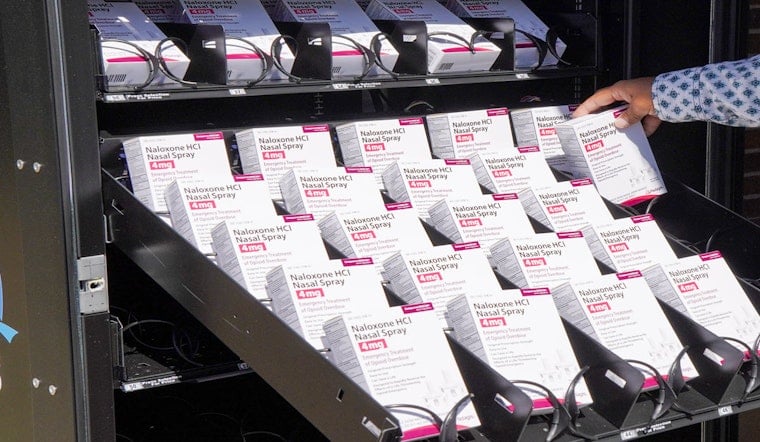
The cityscape of Minneapolis adopts a new fixture with the installation of its first northside NARCAN® vending machine, aiming to mitigate the grips of opioid overdoses by expanding the public's access to the life-saving drug. The machine, installed at Fire Station 14 (2002 Lowry Ave. N.), delivers 24-hour availability of naloxone, a medication proven critical in reversing the detrimental effects of an opioid overdose, offering over 100 boxes, each housing two doses, free of cost and hurdles to community members in need.
The initiative launched as a pilot program by the Minneapolis Health Department in coordination with Hennepin County, places its second machine within city limits; it arrives amid an escalating crisis where the fabric of communities becomes ever more entwined with the tendrils of addiction and the tragedies they bring, and where the first machine at Fire Station 21 (3209 E. 38th St.), since its inception last July, has distributed over 1,700 boxes though April. Beyond its role as a dispenser of NARCAN, Fire Station 14 also operates as one of the City’s Safe Stations, providing a sanctuary for those caught in the throes of substance use, offering connections to peer recovery specialists and support networks.
NARCAN, often known by its generic name naloxone, acts upon overdoses induced by opioids such as heroin, morphine, oxycodone, methadone, fentanyl, hydrocodone, and buprenorphine; it presides with the potential to draw back the overpowered to a realm of breath once more. As reported by the City of Minneapolis, the swift intervention with naloxone saved an individual's life at the hands of Cynthia, a certified peer recovery specialist with the Twin Cities Recovery Project, who administered the drug to an unconscious man succumbing to an overdose in a parking lot, depicting the dire need for such resources at the ready.
The signage of an opioid overdose, marked by symptoms such as unconsciousness, difficulty in breathing, skin discoloration, and a constellation of other alarming signs, implores immediate action—calling 911 followed by an administration of NARCAN, which could offer not just a reprieve, but a gateway to the long journey of recovery and rehabilitation. The presence of NARCAN vending machines is a testament to the ongoing efforts to arm citizens against an epidemic that shows no sign of abatement, striving to ensure that life, as frail as it often appears amidst the scourge of addiction, can be afforded another chance.





